The Stage: Do or Die for Noida
Coming into their final league stage match, Noida Kings knew what was at stake. A win was non-negotiable — anything less would end their season. Their opponents were Meerut Mavericks, an unbeaten side riding high on confidence throughout the tournament.
Then the rain arrived. The fixture was truncated to a five-over shoot-off — the kind of shortened format that traditionally favours batters and puts bowlers under enormous pressure. With Meerut batting first, Noida were in for a tough day.
Or so it seemed.
The Hat-Trick That Turned the Match
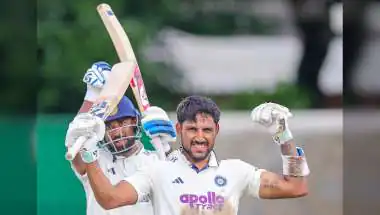
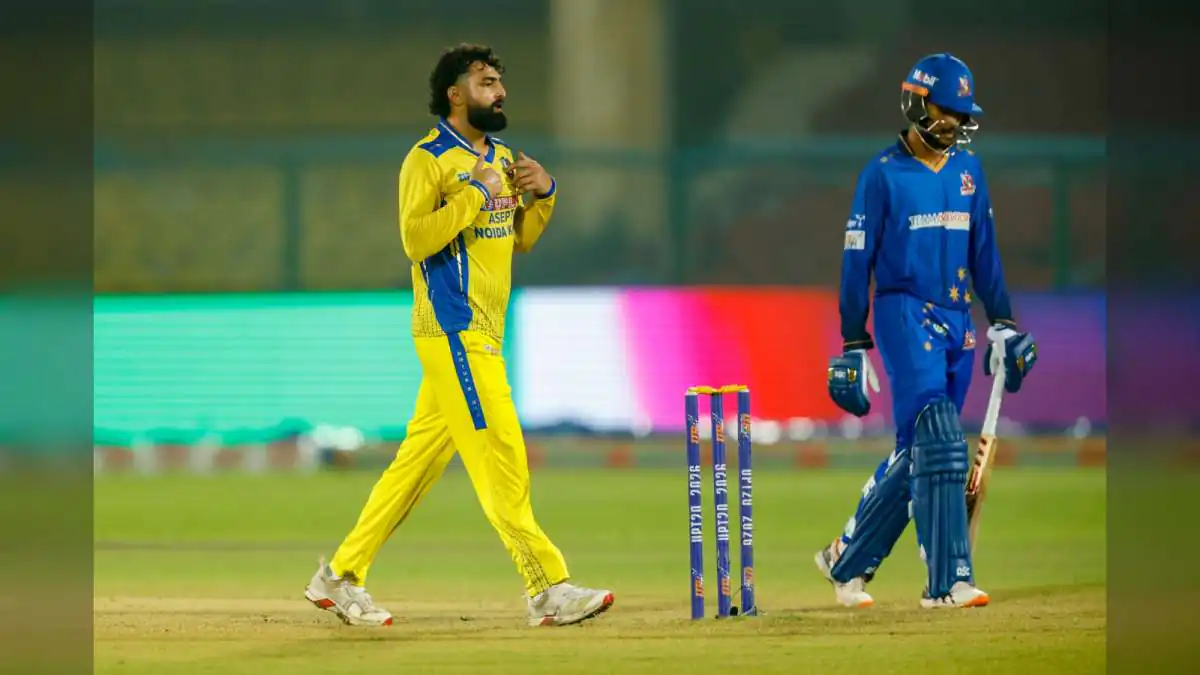
Shiva Singh, son of former Ranji Trophy player Ajit Singh, walked into the situation and turned it upside down. Bowling with clarity and control, the left-arm spinner ripped through the Meerut batting order — picking up a hat-trick as part of a five-wicket haul that restricted the previously unbeaten side to a shockingly low total of 33/7.
That level of performance in a five-over T20 shoot-off is almost unheard of. And it set the platform Noida needed. The Kings chased down the target comfortably in just 3.3 overs — sealing their playoff qualification in emphatic style.
The Phone Call That Changed Everything
After the game, Shiva revealed the deeply personal story behind his match-winning performance — one rooted not in tactics or preparation but in a simple conversation with his father.
"Actually, I hadn't spoken to my dad for the first nine matches," Shiva revealed after the game. "Today, he called me up and said, 'It's the last league game, just play the way you always do. It's on you now; you are the main player of the team. Just perform the way you do in local matches.' That really helped me. Mentally, I was taking a lot of pressure before this, but hopefully, it turned out to be a great day."
That's a beautifully human insight into what elite cricket often looks like beneath the surface. Behind the strategy meetings, the analytics and the training routines sits the emotional weight of a young cricketer battling his own pressure — and sometimes, the release comes from something as timeless as a father's reassurance.
The Plan for a Five-Over Match
Speaking about his approach to bowling in a truncated match, Shiva laid out a smart, disciplined mindset — one that clearly served him well.
"The planning is quite simple," Shiva explained when asked about his approach to the shortened game. "Since it's a short match, you have to look at the batsman, the wicket, and the conditions, and bowl accordingly. You have to think a bit differently from your usual big-match plans. You have to be a bit smarter. My only plan was not to concede boundaries."
That single line — "my only plan was not to concede boundaries" — is bowling economy philosophy distilled into its purest form. In a five-over game where batters are looking to attack from ball one, denying boundaries is often the only strategy that works. Shiva executed it with precision.
The U19 World Cup Legacy
Shiva Singh's story carries an extra layer of resonance for Indian cricket fans. He was part of India's 2018 U19 World Cup-winning squad — a legendary batch that also featured Prithvi Shaw as captain, Shubman Gill, and Arshdeep Singh. Since then, Gill has become India's captain in Tests and ODIs, while Arshdeep has become a regular member of the senior international side.
Shiva, meanwhile, has been quietly building his own path — with visible determination and self-awareness.
The Right Mindset
Asked about how he views his own journey compared to his more high-profile U19 batchmates, Shiva delivered one of the more mature answers of the day.
"If you want to keep playing cricket, you have to learn something new every single day," he reflected. "You need to have that mindset to learn; only then can you move forward. I don't really look at where my batchmates are right now. I just try to focus on balancing my weaknesses and positives so I can perform well in the match."
That kind of grounded, self-directed philosophy is exactly what separates cricketers who continue to grow from those who plateau. Shiva's focus on continuous improvement over comparison is a lesson young cricketers everywhere would benefit from carrying with them.
From Kashi Rudras to Noida Kings
Shiva Singh's UPT20 journey has been rich. He was part of Kashi Rudras during the first three seasons of the league, helping them win two titles. This season, he has moved to Noida Kings — a franchise now being led by Prashant Veer, a Rs 14.2 crore signing of the Chennai Super Kings.
Praise for Captain Prashant Veer
Shiva was full of appreciation for his captain, offering a warm assessment of what Prashant brings to the Noida Kings dressing room.
"Prashant has played the IPL, so I would say he brings a lot of experience," Shiva noted, praising his skipper. "This is his fourth year, and he has been doing great in all four seasons. Earlier, he was alone in Noida, playing innings that won matches single-handedly. He's a very good leader and a great team man. He always steps up in tough situations. It shows character—coming from the IPL and dominating here. He has a really good attitude towards cricket."
Coming from a player who has just won his side a playoff spot, that kind of open praise for a captain reveals a healthy, aligned dressing room culture — often one of the most under-discussed drivers of team success in franchise cricket.
The Playoff Picture
With their emphatic win, Noida Kings have now become the third team to book their place in the UPT20 League playoffs — after Meerut Mavericks and Lucknow Falcons. Now they will set their sights on going the distance and lifting their maiden UPT20 title.
Why It Matters
Domestic T20 leagues like UPT20 play an increasingly important role in India's cricketing ecosystem. They give players outside the immediate national spotlight a stage to perform, sharpen their skills and prove themselves in high-pressure situations. Shiva Singh's Sunday performance is the perfect example of what these leagues can produce — a player rediscovering his form through a phone call from his father, seizing a must-win moment, and delivering a match-defining performance that carries his team into a playoff spot.
For selectors, scouts and IPL franchise talent evaluators, performances like this stand out. A five-wicket haul with a hat-trick in a five-over shoot-off — under intense pressure and against an unbeaten side — is exactly the kind of high-stakes moment that separates capable domestic performers from special ones.
Cultural Impact
Shiva's story is also a beautiful reminder of the emotional infrastructure that quietly holds up so many sports careers in India. Family — especially fathers who have themselves played the game — often serve as invisible coaches, mentors and mental health anchors for young cricketers navigating the pressure of the professional circuit. Ajit Singh's call to his son on Sunday will now go down as one of those moments that shaped a match.
The Bigger Picture
Shiva Singh's Sunday performance for Noida Kings will be remembered for many reasons — the hat-trick, the five-wicket haul, the playoff qualification and the emphatic dismantling of an unbeaten side. But at the heart of it all was something much simpler. A father calling his son. A son listening. And a young cricketer finally releasing the mental pressure he had carried through nine matches to deliver one of the finest bowling performances of his career.
The playoffs now beckon Noida Kings, and with a player like Shiva Singh peaking at exactly the right moment, they will fancy their chances of going all the way. For the young left-arm spinner himself, this is just another reminder that in cricket — as in life — sometimes the biggest moments are set in motion not by tactics or team meetings, but by a familiar voice on the other end of a phone call, reminding you to just play the way you always do.