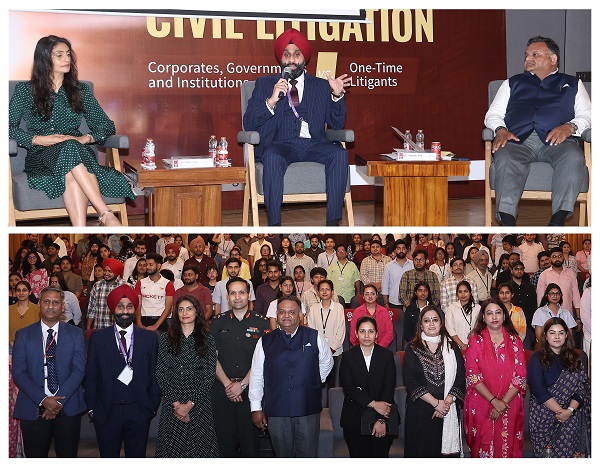
The core theme centred on how frequent engagement with the legal system gives institutional litigants distinct advantages — deeper procedural knowledge, better risk assessment, stronger legal teams, and greater financial staying power — often placing ordinary citizens at a structural disadvantage. Panellists explored whether existing rules and emerging practices can effectively level the playing field.
Lakhvir Singh, drawing from his experience in the UK jurisdiction, explained that repeat litigants typically develop sharper pre-litigation strategies. “They are generally more aware of when it is sensible to proceed with litigation and when it may be more appropriate to resolve a dispute outside court,” he said. He emphasised, however, that once a case enters court, outcomes hinge on the merits, evidence, and legal arguments rather than prior experience alone. The UK’s Civil Procedure Rules, he noted, apply uniformly and aim to ensure predictability and fairness for all parties.
Gurprit Mattu highlighted the growing preference for early mediation, particularly in commercial matters. “Early mediation can level the playing field because neither party has yet incurred heavy legal costs,” he observed. He pointed to the high cost risks in English litigation — where even a victorious party may recover only a portion of expenses — as a key driver behind the rise of mediation. Unlike arbitration or full court proceedings, mediation often resolves disputes in a single session or short timeframe, preserving business relationships and reducing expense.
From the Indian perspective, Senior Advocate Manish Jain described the practical burdens faced by individual litigants. Prolonged proceedings, multiple appeals, and the need for separate execution actions after winning can overwhelm private parties, while institutional opponents have the resources to sustain long battles. Jain suggested that courts imposing meaningful costs on parties pursuing frivolous claims could help deter unnecessary litigation and ease pressure on the judicial system.
Echoing the strategic dimension, Senior Advocate Aman Pal remarked that repeated exposure to litigation sharpens an understanding of risk mitigation and cost control. “Repeat or institutional litigants… often develop a clearer understanding of these aspects,” he said, enabling more informed decisions about whether to litigate or settle.
Prof (Dr) Ashutosh Hajela, summarising the session’s value, described the deliberations as “highly insightful and fruitful.” He highlighted key takeaways: the importance of promoting mediation, reducing unnecessary court battles, and pursuing institutional reforms to improve access to justice. He noted strong appreciation from students, young lawyers, faculty, and other attendees, underlining how such platforms connect classroom theory with courtroom realities.
By hosting this discussion during India International Disputes Week 2026, Chandigarh University reinforced its commitment to fostering dialogue on contemporary legal challenges and equipping future lawyers with practical, policy-oriented perspectives. The event also contributed to broader national efforts to position India as a trusted centre for efficient, fair, and internationally respected dispute resolution — whether through litigation, arbitration, or mediation. As institutional litigants continue to dominate dockets in many jurisdictions, conversations like this remain essential for identifying safeguards that protect the rights and realities of ordinary citizens within the justice system.