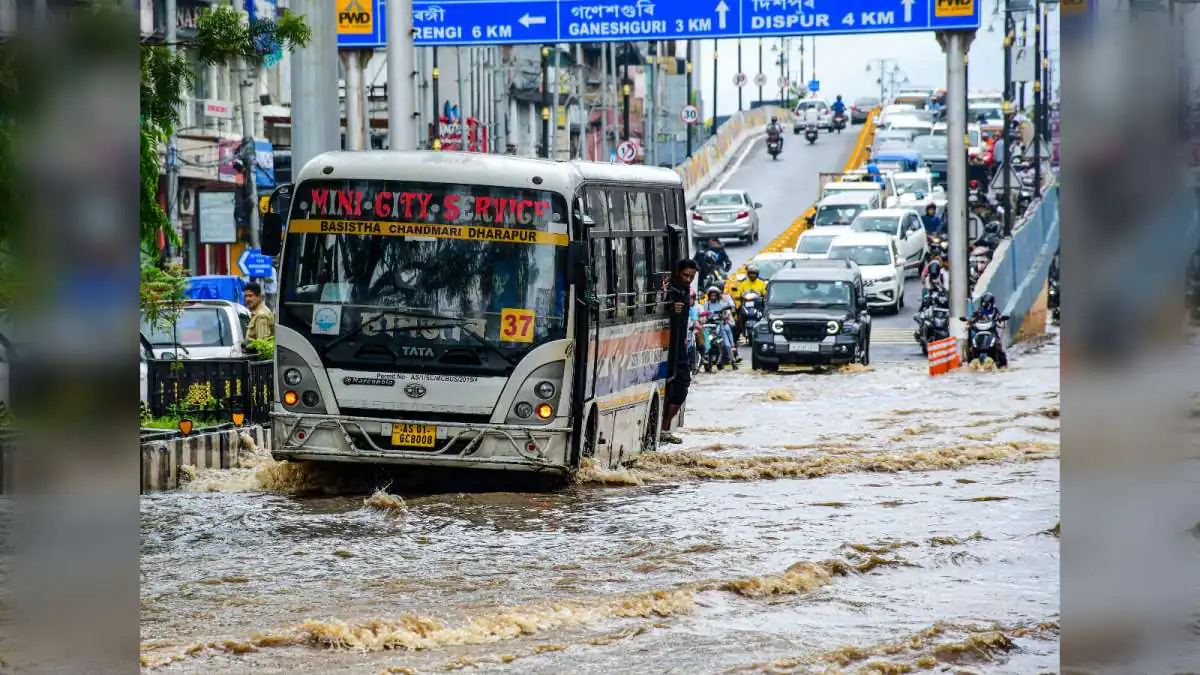
For the affected communities, and for everyone across Assam and beyond who has been watching the state navigate multiple flood spells over recent months, Thursday's assessment carries both practical urgency and deeper reflection about the ongoing challenges Assam faces during its monsoon seasons.
The Current Assessment
Speaking about the current situation, a senior official said that floodwaters have affected seven districts across Assam. These are Goalpara, Sivasagar, Biswanath, Nagaon, Morigaon, West Karbi Anglong and Cachar.
Around 25,083 people in 155 villages are currently affected by the floods, according to ASDMA's assessment. That's a significant number of families navigating the immediate challenges of displacement, disruption and uncertainty as flood conditions unfold in their communities.
To support displaced residents, 13 relief camps have been set up to accommodate people who have had to leave their homes. These camps represent the first line of humanitarian response — providing shelter, meals, water and basic amenities to families whose homes have become temporarily unlivable.
The Agricultural Impact
Beyond the direct human displacement, the current flooding has also caused considerable damage to agricultural land — with cascading implications for farmer livelihoods across affected districts.
According to ASDMA, around 6,477.31 hectares of crop area have been affected by the inundation. That's a substantial area of agricultural loss — one that raises real concerns over the impact on the livelihoods of farming communities in the affected districts.
For farmers whose seasonal cultivation has been damaged, the coming weeks and months will require sustained support — both immediate relief assistance and longer-term help with crop recovery, seed replenishment and livelihood restoration.
The River Levels of Concern
River levels continue to be a concern in some areas of the state. Specifically, the Dhansiri River at Numaligarh and the Katakhal River at Matizuri are flowing above their respective danger levels.
When rivers flow above danger levels, the risks include continued inundation of adjacent areas, potential further displacement of nearby communities, damage to riverside infrastructure and heightened need for careful monitoring by disaster management authorities.
For residents living along these river corridors, the current situation calls for continued alertness and full cooperation with any evacuation or safety advisories issued by local authorities.
The Human Toll
The most sobering dimension of Thursday's assessment is the confirmation that the total flood-related death toll in Assam for the year has now climbed to 108 — following the latest fatality of a woman in West Karbi Anglong district.
Each of those 108 numbers represents a human being. A family. A community affected forever by the loss. Behind every one of those numbers sits people who will carry the memory of lives lost in this year's floods for the rest of their own lives.
For Assam as a state, and for India's broader disaster response ecosystem, that ongoing human toll is a reminder that flood-related fatalities remain a serious challenge — one that continued investment in warning systems, evacuation infrastructure, community preparedness and rapid response capacity must continue to address.
The Ongoing Institutional Response
Authorities across Assam are keeping a close watch on river levels, low-lying areas and other vulnerable locations as flood conditions persist in parts of the state.
Relief and rescue operations are continuing in the affected districts, with local administrations working to provide assistance to people impacted by the floods. Officials are also carrying out assessments to determine the extent of damage to homes, agricultural land and other properties.
The administration has been actively monitoring areas vulnerable to further inundation, given the continuing concerns over rising water levels in some rivers.
That coordinated ongoing response reflects the substantial disaster management capacity Assam has built up over years of navigating recurring monsoon-season flooding.
Why It Matters
Assam is one of India's most flood-prone states. Its geographical position — with the mighty Brahmaputra River system and its tributaries flowing through the state, combined with heavy monsoon rainfall patterns — creates recurring flood challenges that the state navigates year after year.
Every flood season carries real human, economic and social costs. Displaced families. Damaged homes. Destroyed crops. Disrupted livelihoods. And, sadly, lost lives.
For Assam's people, resilience in the face of these recurring challenges has become a defining characteristic. Communities help each other through relief camp stays. Neighbours support neighbours through home damage. Farmers rebuild their agricultural work after devastating crop losses. Local administrators, disaster response teams and civic organisations coordinate response efforts through weeks and months of sustained work.
That resilience deserves recognition — and it also deserves continued institutional support to reduce the sustained toll of these events over time.
District-Level Focus
Each of the seven affected districts is navigating its own version of the current situation.
Goalpara sits in western Assam and often faces flood pressure during high monsoon activity. Sivasagar in Upper Assam carries both flood vulnerability and significant cultural and historical importance. Biswanath on the north bank of the Brahmaputra frequently experiences river-related inundation. Nagaon in central Assam is one of the state's larger districts and has significant flood-prone areas. Morigaon faces recurring flood challenges given its geographical position. West Karbi Anglong in the hill districts region is currently dealing with the tragic latest fatality. Cachar in the Barak Valley region also faces its own flooding vulnerabilities.
For each of these districts, the coming days will require sustained coordinated response, careful monitoring and effective delivery of relief and support to affected communities.
The Farmer Impact
For Assam's farming communities, the 6,477.31 hectares of affected crop area represents a genuinely painful setback. Crops that farmers have invested labour, savings and hope in have been damaged or destroyed. The immediate financial impact will be significant. The longer-term impact — on family incomes, on planning for the next agricultural cycle, on the broader rural economy — will require sustained support to help farmers recover.
For Assam's agriculture department, the state government's rural development machinery, and various rural credit and insurance institutions, the coming weeks will require thoughtful, focused effort to support affected farming families through their recovery journeys.
The Displacement Reality
For the families currently in the 13 relief camps across the affected districts, life has been temporarily transformed. Familiar homes have been left behind. Daily routines have been disrupted. Personal belongings have been lost or damaged. Children's schooling has been affected. Livelihoods have been suspended.
For these families, the quality of relief camp operations matters enormously. Adequate food and water. Safe shelter. Basic medical care. Access to hygiene facilities. Care for the specific needs of children, senior citizens and pregnant women. Emotional support for families processing sudden displacement.
Local administrations, working alongside NGOs and civil society organisations, carry the important responsibility of ensuring that these camps provide dignified, adequate support for as long as families need to stay in them.
The Broader Context
Assam has been experiencing recurring flood situations during the monsoon, with large areas of the state's riverine and low-lying regions remaining vulnerable to inundation. This year has been a particularly difficult one — with the 108 flood-related deaths reflecting the sustained human cost of the season's multiple flood spells.
For India's broader conversation about climate adaptation, disaster preparedness and long-term flood management in vulnerable states, Assam's ongoing experience represents both a challenge and a lesson. Investment in early warning systems, robust evacuation infrastructure, community preparedness programmes, resilient rural infrastructure and effective post-disaster livelihood restoration all matter enormously.
Institutional Recognition
For the Assam State Disaster Management Authority, the state government's various response departments, the National Disaster Response Force, and the countless local administration officials, community volunteers and civil society workers who have been supporting flood-affected families through this difficult season — Thursday's assessment is another reminder of the sustained, difficult work they continue to do on behalf of the state's people.
That work often happens without significant public recognition. But it makes an enormous difference to the lives of the affected families and communities every single day.
The Bigger Picture
Thursday's ASDMA assessment captures a snapshot of a genuinely difficult ongoing chapter for Assam. Over 25,000 people affected across seven districts. 155 villages under flood impact. 13 relief camps operational. Over 6,400 hectares of crop area damaged. Two rivers flowing above danger levels. And a year-to-date flood-related death toll of 108 that carries the weight of every single life lost.
For Assam's people, particularly those directly affected, the coming days will call for continued resilience, community support and cooperation with authorities. For the state's institutional systems, the priority is sustained coordinated response — combining immediate relief with careful monitoring, damage assessment and preparation for any further escalation.
For India's broader disaster response ecosystem, Assam's ongoing situation is a reminder that flood management remains one of the most consequential challenges for climate-vulnerable states — one that continued investment, coordination and community engagement must continue to address.
For everyone connected to Assam — whether residents, family members of those affected, or observers watching from elsewhere — the message from Thursday's assessment is one that calls for both practical concern and quiet solidarity.
The affected families are navigating a genuinely difficult time. The relief workers are doing sustained, demanding work. The institutional systems are operating in extended response mode. And the state as a whole is once again demonstrating the resilience that has always characterised its people during flood seasons.
For long-term progress, continued investment in flood preparedness infrastructure, climate adaptation, riverbank management and community resilience will matter. So will sustained attention to the affected families' longer-term recovery needs — well after the immediate flood situation has passed.
But in the immediate present, the priority is clear. Support the affected. Sustain the relief efforts. Monitor the river levels. Respect the human cost. And extend to the people of Assam the same care, respect and solidarity that difficult moments like this always deserve.
Because as Thursday's assessment made unmistakably clear, another flood season is testing Assam once again — and once again, the state's people, institutions and communities are working together to navigate through it. That work deserves recognition. It deserves support. And it deserves the continued attention of everyone with a stake in ensuring that vulnerable states like Assam receive the sustained investment, care and solidarity that their recurring flood realities genuinely call for.
Also Read: Assam cabinet eases norms to attract private investment in higher education