The Coordinated Approach
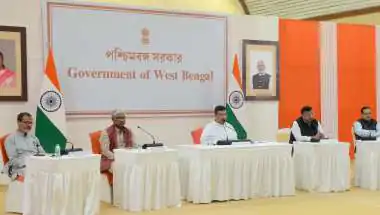
The meeting will be attended by some ministers and all the top bureaucrats from five key state departments — Health, Public Works, Panchayat Affairs and Rural Development, Municipal Affairs and Urban Development, and Irrigation. Together, these departments will work out the blueprint of how a coordinated approach can be adopted to combat the current dengue crisis.
The rationale behind bringing multiple departments together reflects the multi-dimensional nature of the challenge.
"The Chief Minister is of the opinion that although the primary task of combating the crisis is of the state health department, the said department alone might not be able to combat the current crisis unless it works in coordination with the other four departments," said a senior officer from the state secretariat.
That framing is important. Dengue is not just a medical problem — it is a public sanitation, water management, urban planning, waste disposal and rural infrastructure problem all at once. Any effective response must therefore work across multiple department jurisdictions simultaneously.
The 21 Urban Civic Bodies
Alongside representatives from the five state departments, nodal officers from 21 urban civic bodies in the state have also been asked to be present at the meeting. This inclusion is critical, as urban civic bodies are typically the frontline institutions responsible for on-ground execution of mosquito control, sanitation drives and public health outreach.
The meeting is scheduled to start at 5 p.m.
The Cleanliness Drive Rollout
According to the state government official, the state municipal affairs and urban development department has already started intensifying cleanliness drives in the urban areas across Kolkata and its suburbs.
Now, that effort is set to be significantly expanded into rural geographies.
"Now it has been decided that the state irrigation and panchayat affairs and rural development departments will be involved actively to undertake the same cleanliness drive in the rural areas," the state government official added.
That expansion into rural regions is significant. In many parts of West Bengal, mosquito breeding grounds are as much a rural challenge as an urban one — driven by open water storage, agricultural runoff, and pockets of stagnant water in villages and semi-urban settlements.
Health Department as the Nodal Coordinator
Despite the involvement of so many departments, the state health department will act as the nodal department in this coordinated exercise. The entire exercise will be conducted under the direct supervision of the Chief Minister's office.
"Precisely, that is why the crucial meeting today had been convened at Swasthya Bhavan, instead of the state secretariat of Nabanna," the state government official said.
That location signal is meaningful. Convening the meeting at the health department headquarters, rather than the general state secretariat, is a symbolic reinforcement of where the operational nerve centre of the anti-dengue campaign will sit.
The Operational Challenges
The state government official also spoke candidly about the operational challenges that make the current dengue response particularly difficult.
"The boards of almost all of the urban civic bodies in the state are non-functional now. The health workers who were involved in the work of tackling the mosquito larvae menace earlier are now working for the implementation of the Ayushman Bharat project in the state. The doctors at the health centres, who are already overburdened, are not always able to concentrate properly in this dengue-combating exercise," the official said.
That is an unusually honest institutional assessment. It highlights three real bottlenecks — the absence of functional urban civic boards in many locations, the diversion of trained health workers to the rollout of Ayushman Bharat, and the workload pressures on doctors at primary health centres.
In such a situation, the Chief Minister's personal intervention is considered significant — bringing top-down political attention and administrative coordination to a challenge that has struggled to find sustained institutional focus.
The Five Most Vulnerable Districts
The West Bengal Health Department has already identified five districts as the most dengue-prone in the state. These are — Kolkata, Howrah, North 24 Parganas, South 24 Parganas and Murshidabad.
These districts represent a mix of dense urban geographies (Kolkata, Howrah), highly populated peri-urban regions (North and South 24 Parganas), and important rural population centres (Murshidabad). Targeting these five districts with concentrated anti-dengue action is expected to significantly reduce case load and mortality if implemented well.
The Weather Factor
Adding another layer of urgency to the situation is the current weather pattern. The continued weather unpredictability and rainfall have kept the state health department most worried, as dengue cases and dengue-related deaths have increased in certain districts.
Erratic rainfall creates ideal conditions for mosquito breeding — with alternating spells of rain, humidity and warmth producing water accumulation in exactly the kind of pockets where aedes aegypti mosquitoes thrive.
Why It Matters
Dengue is one of India's most consequential seasonal public health threats. Every year, thousands of families across states like West Bengal face the disease's economic, medical and emotional toll. When any state government moves to coordinate a comprehensive multi-department response, the impact can extend to lakhs of vulnerable residents.
For West Bengal specifically, the current dengue season carries added weight because of the operational constraints being flagged — non-functional civic boards, redeployed health workers, and doctors stretched thin. Coordinated top-down action becomes especially important when routine institutional systems are under such strain.
Public Health Impact
For residents of the five identified high-risk districts, the outcomes of Tuesday's meeting will matter directly. A well-coordinated response can translate into intensified fogging operations, larvae control drives, better public awareness campaigns, faster case detection, timely referrals to secondary care and reduced mortality.
For local hospitals and primary health centres, improved coordination between departments can also ease the operational burden — with cleanliness and vector-control activities managed by municipal and rural bodies, allowing medical staff to focus on patient care.
The Bigger Picture
Tuesday's dengue strategy meeting at Swasthya Bhavan is more than an administrative gathering. It represents a moment of coordinated seriousness — five departments, 21 civic bodies, top bureaucrats, and the Chief Minister himself coming together to fight a disease that quietly claims lives across the state every monsoon and post-monsoon season.
Dengue's damage is often measured in individual case counts and mortality figures. But its true toll is much larger — households derailed, incomes lost, hospitals overloaded, children pulled from school, and rural economies disrupted. When state governments act decisively and coordinate effectively, that toll can be significantly reduced.
As West Bengal's five most vulnerable districts brace for continued weather-driven vector activity in the coming weeks, the effectiveness of Tuesday's coordinated blueprint will be closely watched. For families across Kolkata, Howrah, North 24 Parganas, South 24 Parganas and Murshidabad, the message that will matter most is one of visible action — cleaner streets, drained water pockets, well-run fogging operations, well-informed public awareness, and healthcare centres ready to catch cases early.
And on Tuesday evening at Swasthya Bhavan, that blueprint will begin to take shape — one department, one district, one line of coordinated defence at a time. Because in the fight against dengue, coordination isn't a bonus. It is the difference between a crisis contained and a crisis prolonged.