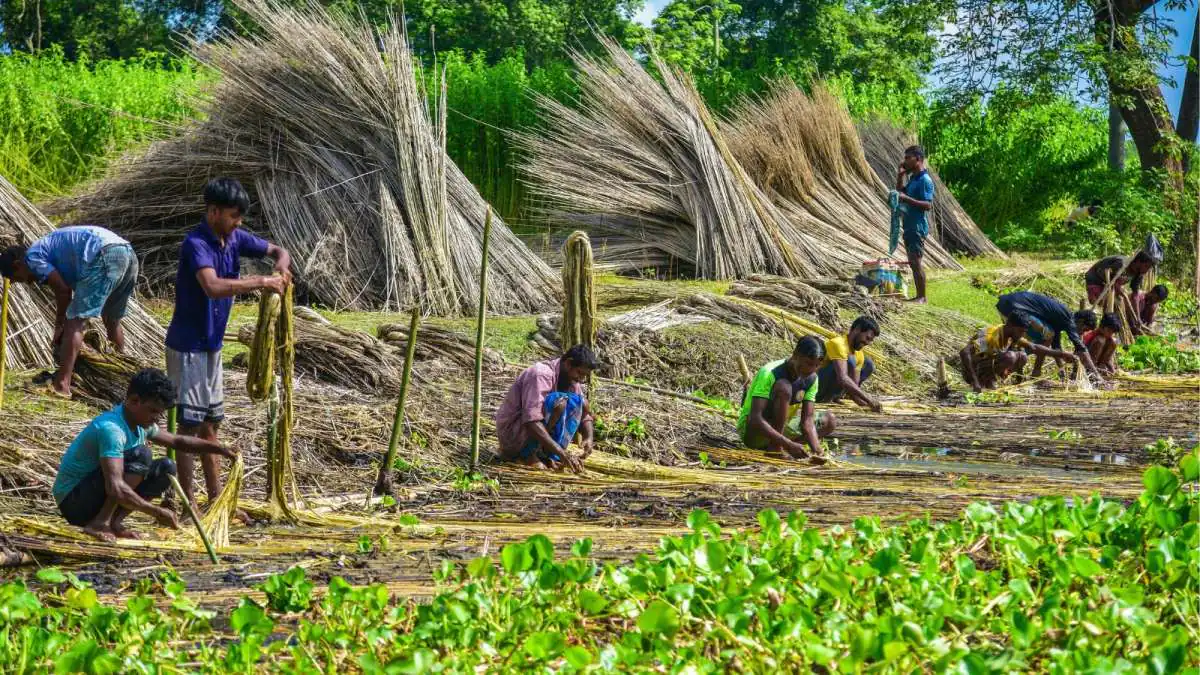



























The Prime Minister Dhan-Dhaanya Krishi Yojana (PMDDKY), aimed at developing 100 “Aspirational Agricultural Districts,” completes its first year on October 11, a government factsheet said.
Approved by the Union Cabinet on July 16, 2025, and launched by Prime Minister Narendra Modi on October 11, 2025, the scheme targets 100 low-performing agricultural districts with an annual outlay of ₹24,000 crore for six years.

How the Scheme Works
| Feature |
Details |
| Duration |
Six years from 2025–26 |
| Annual outlay |
₹24,000 crore |
| Coverage |
100 districts, at least one per state |
| Convergence |
36 Central schemes, 11 ministries, plus state schemes and private sector |
| Selection |
Low productivity, moderate cropping intensity, below-average credit |
The number of districts per state depends on its share of net cropped area and operational holdings.
First-Year Report Card
- All 100 districts have prepared District Agriculture Plans, now under implementation.
- A dashboard went live in October 2025, with monthly rankings from November 2025.
- All districts submitted output data up to August 2026 and outcome data for 2025–26.
- The average score across six objectives rose from 18.85 in April 2026 to 46.89 in August 2026, a jump of 28.04 points.
- Public sector companies have been asked to adopt these districts for CSR activities in 2026–27 and 2027–28.
An FPO Sangam in December 2025 brought together over 72 Farmer Producer Organisations from 15 states.
Why It Matters: Rankings Drive Results, but Farmers Need Income
The scheme borrows from the Aspirational Districts model: rank districts publicly every month, and let competition push performance. The jump in average scores, roughly 2.5 times in five months, suggests the monitoring system is pushing districts to act.
But scores measure progress on indicators such as planning and outputs, not directly whether farmers are earning more. The real test, in the years ahead, will be higher yields, better irrigation and access to credit showing up in farm incomes.
What It Means for Rajasthan
Rajasthan is among the states with the most districts in the scheme, with eight selected, alongside Madhya Pradesh. Uttar Pradesh leads with 12 and Maharashtra has nine. For Rajasthan’s dry-land districts, where water scarcity and low productivity are major challenges, the focus on irrigation and crop diversification is especially relevant.
The Bottom Line
PMDDKY’s first year has built plans, dashboards and rankings across 100 districts. Its next five years will be judged on a simpler measure: whether farmers in these districts earn more.
With inputs from IANS.