


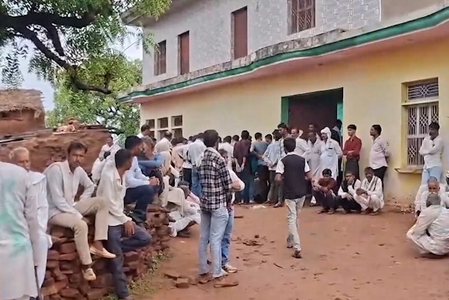






















In most villages, a Sarpanch election is a two- or three-way fight. In Soorwal, a Gram Panchayat in Rajasthan's Sawai Madhopur district, it has become a 43-way contest, and the race has stretched the election machinery in ways rarely seen at the grassroots level.
When the symbol list runs dry
Panchayat candidates are not backed by party symbols. Each contestant gets a symbol from a fixed list set by the election authority, and in a rural poll that symbol is often how voters find their candidate on the ballot. Soorwal's field was so large that officials used up the entire designated list.
The local administration had to seek special permission from the State Election Commission to allot more symbols. After that approval, contestants got new ones, including a bench, a pillow and a boat, so that every candidate would have a distinct symbol. It is a small administrative detail, but it matters: in a village where many voters rely on pictures rather than names, two look-alike symbols could confuse voters and lead to disputes.
The crowded field has also produced an unusually long ballot. With 43 names plus the NOTA (None of the Above) option, voters must choose from 44 entries on a ballot paper reportedly around four feet long. Polling stations have needed special arrangements to handle it, and extra polling staff have been deployed to keep voting smooth and transparent.
The arithmetic of a crowded field
The numbers are what make Soorwal's contest so unpredictable. The Gram Panchayat has about 6,566 registered voters. If those votes were spread evenly, each candidate would get only around 150. Votes are never spread that evenly, but the math still shows what a fragmented field means: the winner may need only a modest share of the total to take the post.
That raises a question larger elections rarely face: how representative is a mandate won from a split electorate? It also tests voters themselves. Finding one symbol among 44 on a ballot taller than many children takes patience, and election staff will be watching how long each voter takes inside the booth.
At the same time, the turnout of contenders shows how much people want a say in local power. A Sarpanch controls village development priorities and local schemes, and in a Panchayat of a few thousand voters, many residents clearly feel they have a real shot.
What comes next
The interest has turned Soorwal into one of the most talked-about villages of this election cycle. Counting for the Sarpanch post will begin after polling closes, and the result will show which of the 43 candidates won enough of Soorwal's voters to claim the post. Whatever the outcome, the four-foot ballot is likely to be remembered as one of the more unusual images from Rajasthan's 2026 Panchayat polls.