For thousands of farmers and teachers who have been making repeated court and police appearances over the past several years, Wednesday's announcement brings genuine, meaningful relief.
The Announcement That Set the Tone
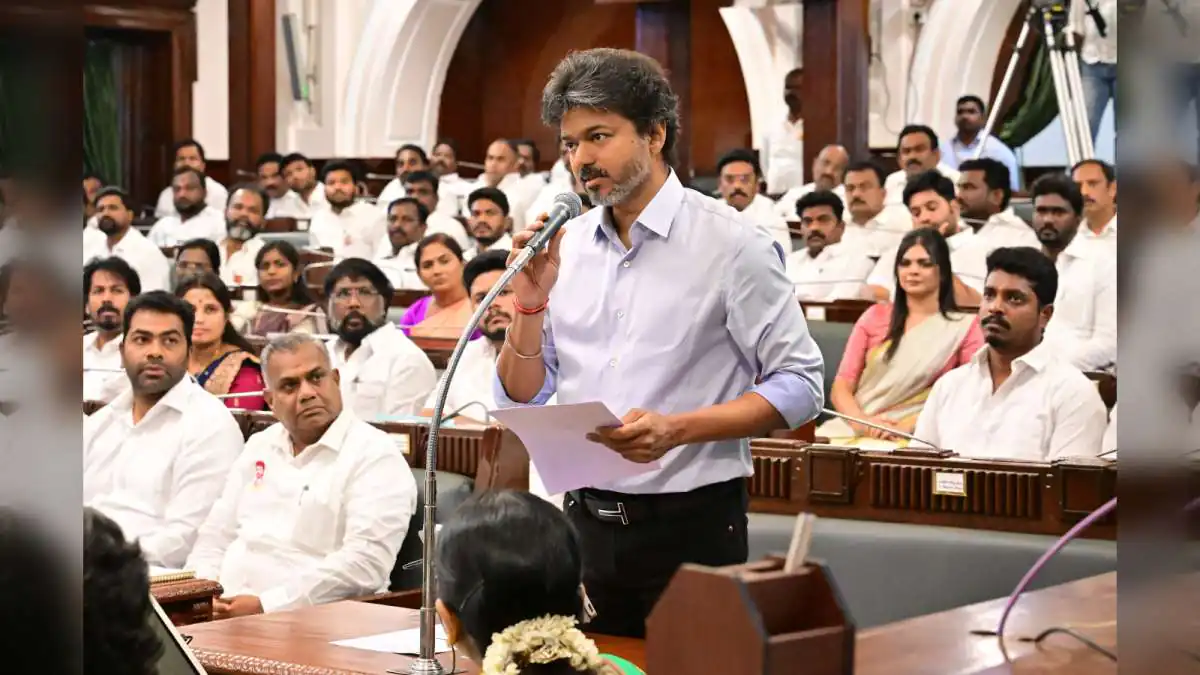
Chief Minister C. Joseph Vijay made the announcement in the Tamil Nadu Legislative Assembly under Rule 110 — a mechanism that allows ministers to make statements of policy importance directly to the House.
The announcement described the case withdrawals as an effort to protect democratic rights and rebuild trust between the state government and ordinary citizens. That kind of framing is deliberate. It positions the withdrawal not as a routine administrative decision but as a principled institutional stance on the relationship between the state and citizens exercising their democratic right to peaceful protest.
The Cases Being Withdrawn
The order will cover a broad set of cases registered against protesters over a five-year window from May 2021 to April 2026.
Two specific categories of protest-related cases have been highlighted in the announcement. First, cases filed against farmers who opposed the proposed State Industries Promotion Corporation of Tamil Nadu (SIPCOT) industrial estate in Tiruvannamalai district. Second, cases registered during the prolonged agitation against the proposed greenfield airport at Parandur in Kancheepuram district.
The Parandur Airport Story
For anyone who has followed Tamil Nadu's civic protest movements over the past several years, the Parandur airport case has been one of the most closely watched.
Residents of Parandur and surrounding villages had organised sustained protests against the airport project, arguing that it would lead to the acquisition of fertile agricultural land, damage waterbodies and destroy traditional sources of income. Their concerns were rooted in the same essential questions that many rural communities across India have raised about large infrastructure projects — questions about livelihoods, ecological sustainability, land rights and the meaningful consultation of affected communities.
Several protesters were booked by the previous government during the agitation. Some farmers were also detained under the Goondas Act — an application that drew significant criticism from political parties, civil society organisations and human rights activists at the time.
Wednesday's announcement effectively unwinds those legal proceedings, providing meaningful relief to the farmers and community members who have been navigating them.
The Teachers Included
The announcement also extends its coverage to teachers who took part in peaceful demonstrations during the same five-year period.
Teachers' associations across Tamil Nadu had organised protests over multiple issues affecting their profession — including salaries, pensions, job security, regularisation of temporary employees, promotions and general working conditions. These are exactly the kinds of livelihood and workplace concerns that teachers around the world routinely raise through peaceful, organised advocacy.
By explicitly including teachers in the withdrawal announcement, the government has signalled that its principled stance extends across occupational categories — not just to agrarian protests but also to the concerns raised by educators.
The Government's Rationale
The government has been clear about the principles guiding the decision.
According to the announcement, the cases would be withdrawn on humanitarian and democratic grounds, regardless of the legal provisions under which they had been registered. Necessary instructions would be issued to the departments and authorities concerned to begin the process of withdrawal. Officials will examine the cases and complete the required legal formalities before applications are submitted to the appropriate courts.
The government maintained that people should not be subjected to prolonged criminal proceedings merely for raising legitimate grievances through peaceful and democratic means. CM Vijay emphasised that the administration recognises the right of farmers, teachers and other sections of society to express their concerns without fear of punitive action.
That framing is significant. It articulates a substantive principle — that peaceful protest is a democratic right, and that criminalising participation in peaceful protests undermines the fundamental compact between the state and its citizens.
The Expected Benefits
The move is likely to benefit hundreds of protesters across Tamil Nadu. The government has stated that withdrawing the cases would strengthen democratic values, reduce unnecessary litigation and create a more constructive relationship between citizens and the administration.
For farmers and teachers who have been making repeated appearances before courts and police authorities in connection with the protests, the practical relief is substantial. Court appearances take time away from farming, teaching and family responsibilities. Legal fees create financial strain. And the persistent uncertainty of ongoing criminal proceedings adds meaningful psychological pressure to the everyday lives of the individuals involved.
Wednesday's announcement addresses each of these dimensions in a meaningful way.
Why It Matters
The right to peaceful assembly and protest is one of the foundational elements of any functioning democracy. When citizens can raise their concerns publicly, organise around shared grievances and advocate collectively for their interests without fear of criminal prosecution, democratic institutions become stronger, more responsive and more legitimate.
When peaceful protest is criminalised — through excessive use of criminal cases, preventive detention laws or other punitive legal instruments — the space for democratic engagement narrows, and trust between citizens and the state erodes.
Wednesday's decision by the Tamil Nadu government represents a substantive statement in favour of the first model. It acknowledges that peaceful protest is not a criminal act and that the state should not treat it as one.
Political and Institutional Impact
For the newly elected Tamil Nadu government under Chief Minister C. Joseph Vijay, the case withdrawal announcement represents an early, high-profile signal of the administration's approach to civic and democratic issues. Announcements of this kind, made early in a government's tenure, tend to carry significant symbolic weight — signalling institutional priorities to citizens, civil servants, activists and political observers alike.
For Tamil Nadu's civic and political landscape, the decision opens up important conversations about the state's approach to future protest movements, community consultation on large infrastructure projects, and the appropriate application of laws like the Goondas Act.
For India's broader democratic conversation, the announcement adds another data point to the ongoing discussion about how state governments across the country handle the criminalisation of peaceful dissent.
Impact on Affected Communities
For the farmers of Parandur and Tiruvannamalai, and for the teachers who participated in protests over their working conditions, the case withdrawals bring both practical relief and emotional acknowledgment. The relief comes from the end of ongoing legal proceedings. The acknowledgment comes from being publicly recognised as citizens exercising legitimate democratic rights rather than as criminal defendants.
That combination — practical relief plus public acknowledgment — often matters just as much to affected communities as the underlying legal outcomes themselves.
Civil Society Response
For civil society organisations, human rights activists and legal aid groups that have been advocating for the affected protesters over the past several years, Wednesday's announcement represents a genuine institutional response to sustained advocacy. Cases involving detention under the Goondas Act had drawn particular attention from human rights groups, and the case withdrawal announcement addresses those specific concerns directly.
Cultural Impact
Tamil Nadu has a long, culturally rich tradition of civic engagement, agrarian activism and public advocacy. Farmers' movements, workers' movements, students' movements and teachers' associations have all played meaningful roles in shaping the state's political and social evolution over decades.
By formally recognising that peaceful protest is a legitimate democratic expression rather than a criminal act, the state government is engaging with this deep cultural tradition in a way that many citizens will find affirming.
Institutional Impact
For Tamil Nadu's Home Department, the state's police force, its district administration structures and its judicial system, Wednesday's decision creates a clear implementation agenda. Cases will need to be reviewed, legal formalities completed, and formal withdrawal applications filed in the appropriate courts.
That coordinated administrative work is what will translate the political announcement into real relief for the affected individuals. And the speed and thoroughness of that implementation will itself become an indicator of how meaningfully the state government follows through on its stated commitment.
The Bigger Picture
CM C. Joseph Vijay's Wednesday announcement in the Tamil Nadu Legislative Assembly is more than just an administrative decision. It is a substantive articulation of how the state government intends to approach questions of democratic engagement, peaceful protest and citizen-state relationships.
Farmers who opposed the SIPCOT industrial estate in Tiruvannamalai. Farmers who protested the Parandur airport project. Teachers who advocated for their salaries, pensions and working conditions. Community members who raised their voices peacefully about issues affecting their livelihoods and families. Each of these groups will now find themselves relieved of the criminal cases that had been hanging over them for years.
Beyond the immediate relief, the decision also creates institutional space for a healthier future relationship between the state and its citizens. When citizens know that peaceful protest will not be criminalised, they are more likely to engage constructively with policy processes. When governments know that they can facilitate rather than criminalise dissent, they are more likely to build lasting public trust.
For Tamil Nadu's farmers, teachers and civil society more broadly, Wednesday's announcement represents a moment of meaningful institutional acknowledgment. For the state's democratic culture, it represents a moment of principled reaffirmation.
As the state's departments and authorities now begin the process of formally executing the case withdrawals, the coming weeks and months will offer clear evidence of how comprehensively the announcement translates into practice. But the political intent has been established. The principled stance has been articulated. And the message from the Legislative Assembly to the state's citizens is unmistakably clear.
Peaceful protest is not a crime. Democratic dissent deserves respect, not prosecution. And the relationship between the government and its citizens is being deliberately, publicly reset toward one of mutual trust, mutual respect and shared commitment to democratic values.
For everyone in Tamil Nadu who has ever raised their voice peacefully for a cause they believed in, Wednesday's decision from the Legislative Assembly stands as an important affirmation. And for the broader Indian democratic conversation, it offers exactly the kind of principled leadership that this moment in the country's civic evolution genuinely calls for.
Also Read: CM Vijay Opens Mettur Dam for Delta Irrigation After 3-Month Delay