The Ground-Level Assessment
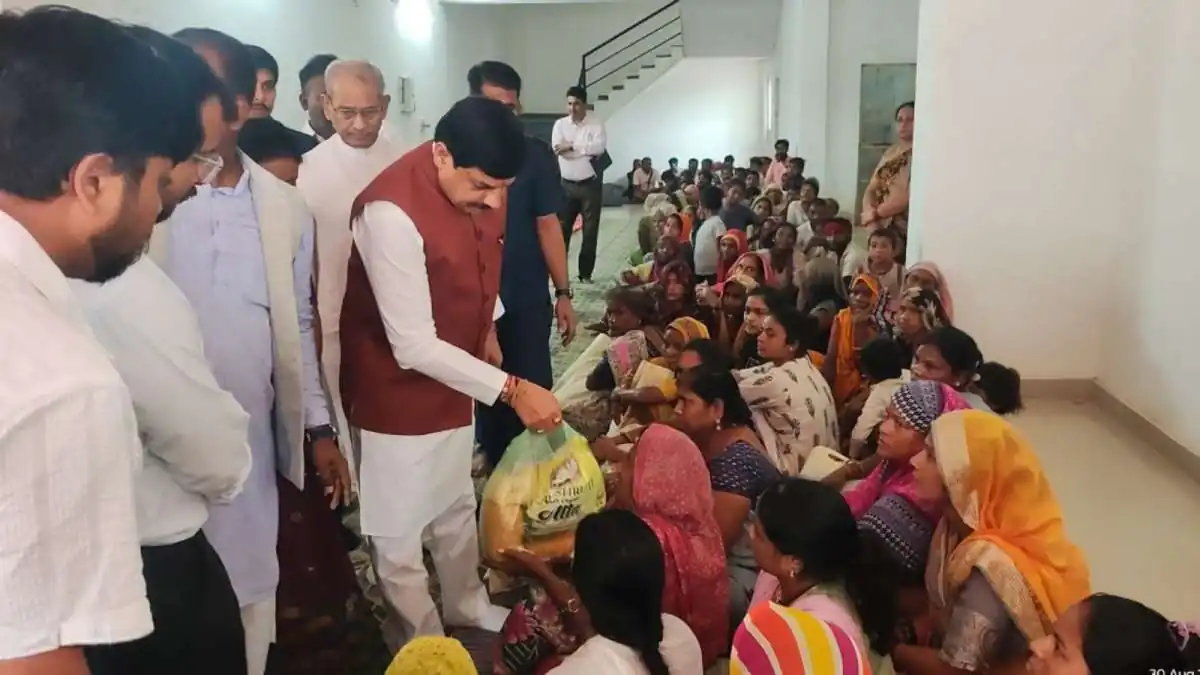
The Chief Minister inquired about the well-being of people staying in relief camps and settlements, and closely reviewed the ongoing relief and rescue operations. His presence on the ground carried more than symbolic weight — it enabled first-hand assessment of the extent of damage, the effectiveness of the relief measures underway, and the emotional condition of the displaced families.
Speaking after the visit, the Chief Minister said relief and rescue work is continuing without any pause across the affected areas.
The Chief Minister's Message
On his X handle, CM Yadav wrote about his visit to the flood-affected areas of Chitrakoot along the Mandakini and Sinhawal rivers, describing his priorities clearly.
"Officials have been directed to remain present on the ground for the next two to three days and ensure the uninterrupted supply of essential materials, medical assistance and food to the affected families. In this difficult time of natural calamity, the state government stands firmly with every flood-affected family," CM Yadav said.
That two-to-three day continuous ground presence for officials is a meaningful administrative instruction. It ensures accountability, real-time coordination and immediate resolution of issues that families in relief camps might face during the most critical period after a flood event.
'No Loss of Life' — A Small Silver Lining
Perhaps the most heartening element of CM Yadav's update was that despite the intensity of the flooding, no loss of life had been reported. He credited this outcome to a combination of factors — divine grace, accurate weather forecasts and the prompt response of the administration.
"Due to divine grace, accurate weather forecasts and the prompt response of the administration, there has been no loss of life," the Chief Minister said.
In natural calamities of this magnitude, avoiding loss of life is arguably the most important outcome any state government can deliver. The credit here appears to belong to a well-functioning coordination chain between meteorological services, disaster response teams, local administration and safety infrastructure.
Focus on Economic Loss Assessment
While human lives have been protected, the Chief Minister acknowledged that many families have suffered significant economic damage — and committed to a thorough survey to assess the loss.
"A thorough survey would be conducted to assess the economic losses suffered by several families, and every possible assistance would be provided to them," he assured.
That commitment matters. Flooding events often destroy homes, damage livelihoods, wipe out livestock, ruin standing crops and disrupt small businesses — many of which sit outside insurance safety nets. A structured survey followed by targeted compensation is what allows families to genuinely recover in the weeks and months after the water recedes.
The Crisis Backdrop
The Chief Minister's visit followed his Saturday announcement that he would review the flooding of the Mandakini River in Chitrakoot and the damage caused by heavy rainfall. The situation had escalated rapidly through the previous 48 hours as continuous downpour caused the river to swell dramatically.
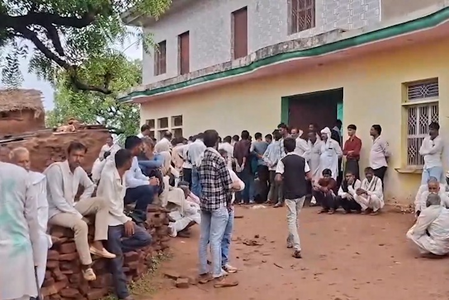
The rising water levels had inundated Ramghat and surrounding areas — pilgrimage-heavy zones that hold deep cultural and religious significance for the region. The old bridge on the Hanuman Dhara access road suffered damage, prompting the deployment of SDRF teams and Indian Air Force helicopters to strengthen rescue and relief operations.
Six relief shelters had been set up with arrangements for food and medical care to accommodate displaced families. Recent updates indicate that the water level of the Mandakini River had begun to recede after approaching the maximum flood level — offering some early relief to the region.
Why It Matters
Chitrakoot is not just a district. For millions across India, it is a sacred pilgrimage destination, closely associated with Lord Ram and revered across religious traditions. Flooding of the Mandakini River — which holds particular spiritual significance — carries emotional weight far beyond the immediate physical impact. Ensuring rapid relief, protecting cultural sites, and supporting displaced families is therefore both an administrative and a cultural priority for the state.
The Chief Minister's personal visit — and the clear public communication that followed — sends a message across two audiences at once. To affected families, it reassures them that the state is present and engaged. To the broader public, it signals proactive governance during a period of natural stress.
Industry and Institutional Impact
For the state's disaster response infrastructure — SDRF teams, IAF coordination, local administration and district-level medical units — the current operation is another live test of India's evolving disaster preparedness architecture. The successful protection of human life indicates that early warning systems and rapid deployment mechanisms are increasingly effective.
For future policy design, the Chitrakoot flooding may generate important lessons on how to strengthen bridge infrastructure, riverbank management and pilgrimage-heavy town preparedness in flood-vulnerable geographies.
Cultural and Emotional Impact
For pilgrims, priests and residents of Ramghat and Hanuman Dhara area, the coming weeks will involve emotional recovery alongside physical restoration. Damage to a bridge on the Hanuman Dhara route is not just a civil engineering setback — it directly affects access to one of the most spiritually important pathways in the region. Its restoration will be closely watched by devotees and residents alike.
The Bigger Picture
CM Mohan Yadav's Sunday visit to Chitrakoot represents governance at its most direct — a chief minister on the ground, in the affected zone, meeting displaced families, listening to their concerns, and issuing clear instructions to his administrative machinery. In an era where public governance is often mediated through statements and press releases, that kind of physical presence still carries unmatched credibility.
As Mandakini's waters begin to recede and Chitrakoot slowly begins its journey back to normalcy, the focus will shift to detailed damage assessment, family-level support and infrastructure restoration. The Chief Minister's assurance — that no affected family will be left without support in the coming days — now becomes the operational commitment his administration will be measured against. And for the families sheltered in Chitrakoot's relief camps this weekend, that commitment is exactly what they needed to hear.