A Decision Rooted in Immediate Need
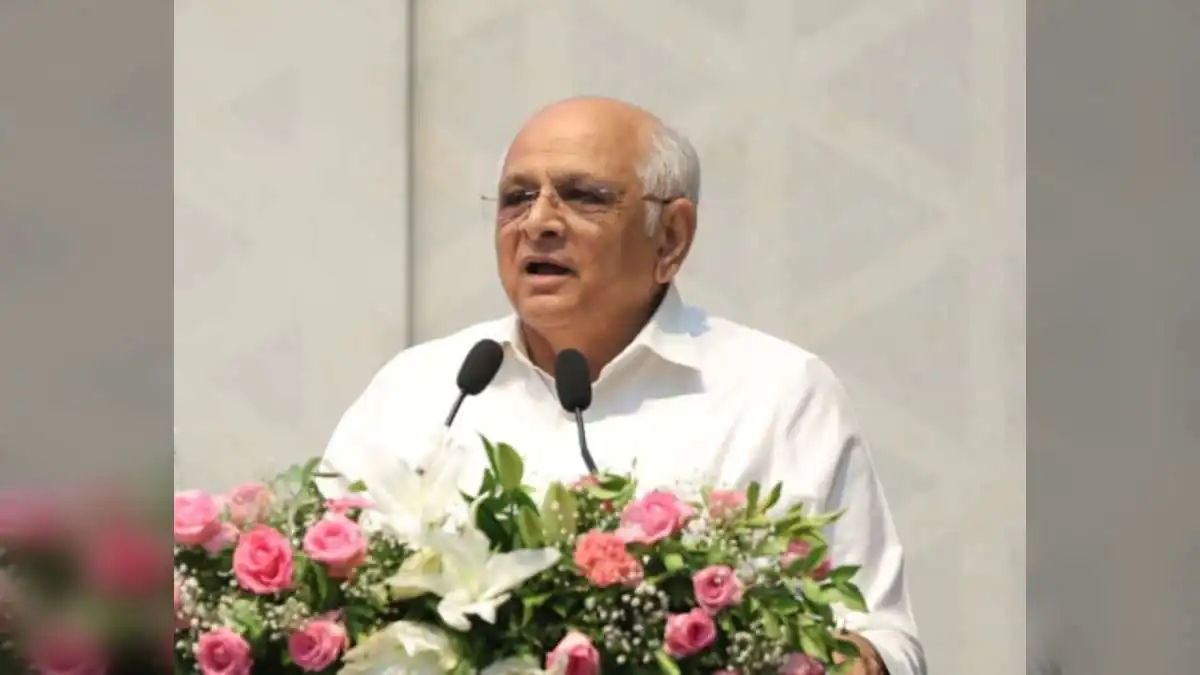
The decision was taken by the state government under Chief Minister Bhupendra Patel, keeping in view the water requirements of residents and farmers in the two Saurashtra districts. Officials explained that the region normally depends on local reservoirs for irrigation, but lower rainfall has affected water availability, while storage in the Narmada basin is also below normal levels.
That double stress — poor rainfall locally and reduced Narmada-basin storage — has forced the state to activate its long-planned water diversion infrastructure to bridge the gap.
How the Water Will Flow
Under the special approval, water will be drawn from the Machhu-2 reservoir through the SAUNI pipeline and supplied towards the local requirements of Jamnagar and Devbhumi Dwarka. The state Water Resources and Water Supply Department said 600 cusecs is currently being drawn through SAUNI Link-1.
That volume represents a substantial delivery through the pipeline network — capable of meaningfully easing the immediate water shortage across the two districts.
The Sequencing: Drinking Water First
One of the most important elements of the state government's decision is its clarity on prioritisation.
"The water would first be allocated for drinking purposes. Any water remaining after meeting drinking-water requirements would subsequently be made available for agriculture and irrigation," officials said.
In a state where water use conflicts between farming and household consumption often become politically sensitive, this sequencing puts human need first. It ensures that even amid an irrigation squeeze, no household is deprived of basic drinking water — a principle that reflects both administrative prudence and public accountability.
About the SAUNI Project
The SAUNI project was designed to divert water through a network of pipelines to reservoirs across the Saurashtra region — one of the most water-stressed parts of Gujarat and, historically, one of the most drought-vulnerable regions of the country.
According to the state government, Link-1 runs from the Machhu-II dam in Morbi district towards Sani Dam in Jamnagar and has a carrying capacity of 1,200 cusecs. It is intended to fill 30 reservoirs across Rajkot, Morbi, Devbhumi Dwarka and Jamnagar districts, benefiting about 2.02 lakh acres.
In effect, SAUNI is one of the most ambitious water transfer engineering projects in western India — a system built to redirect available water into stressed geographies through pipelines rather than the traditional canal-based approach.
Why It Matters
The state's decision comes as local water resources face pressure following lower-than-usual rainfall. For rural households across Devbhumi Dwarka and Jamnagar, that pressure has real consequences — reduced borewell yields, uncertain drinking water supply, and unpredictability around farming decisions for the coming season.
Activating SAUNI Link-1 with an assured 600 cusecs flow provides a structured intervention against those risks. It sends a clear signal that even in a difficult monsoon year, the state has the infrastructure and the institutional coordination to route water where it is needed most.
Governance Implications
The decision also reinforces a governance philosophy visible in several of the Gujarat government's recent moves — one that leans on major infrastructure assets to solve real-time delivery problems. SAUNI is exactly the kind of long-term investment whose value only becomes fully visible during a stress year, and this activation is a live demonstration of that infrastructure paying off.
For state administrations across drought-vulnerable parts of India, the SAUNI model offers a useful case study — showing how pipeline-based water diversion, when planned strategically, can serve as an insurance mechanism during years of poor rainfall.
Impact on Farmers
While the drinking-water priority is unambiguous, the state government has also indicated that farmers will not be left out of the equation. Officials said the measure would help ease drinking-water concerns in parts of Jamnagar and Devbhumi Dwarka while providing relief to farmers dependent on water for agricultural activities.
That balanced framing — protect drinking water first, but keep agriculture in the picture — is likely to help maintain rural morale during a season where farming families across Saurashtra have been anxious about crop planning.
Industry and Rural Impact
For the wider Saurashtra economy — where agriculture, dairy, small-scale manufacturing and cotton processing all depend on water availability — the SAUNI-based release provides a stabilising factor. Confidence in water availability directly influences agricultural sowing decisions, livestock management, and community-level economic activity in the region.
The Bigger Picture
Gujarat's decision to release 600 cusecs through SAUNI Link-1 is more than a routine water management move. It is a real-time demonstration of how large-scale infrastructure investment converts into direct public benefit during moments of stress. By combining engineering scale with clear humanitarian sequencing — drinking water first, agriculture next — the state has quietly reinforced its water governance credibility.
For the residents of Devbhumi Dwarka and Jamnagar, the announcement means one immediate thing: taps will stay running even as skies remain uncertain. And that assurance, delivered through a pipeline network built for exactly this kind of moment, is arguably one of the most quietly powerful outcomes of Gujarat's long-term investment in the SAUNI project. In a state that has fought water scarcity for decades, this Saturday's decision is a reminder that when the rains fall short, careful planning can still keep the water flowing.