JJM 2.0: A Playbook Being Written in Real Time
Since its commencement, JJM 2.0 has led to the emergence of several noteworthy best practices across states and Union Territories in areas such as community participation, source sustainability, water quality management, operation and maintenance, technology adoption and decentralised governance. The mission has generated a rich pool of ground-level innovation — but capturing, structuring and disseminating that innovation has, until now, remained a gap.
The Ministry's new initiative aims to close that gap by turning colleges and universities into on-ground documentation partners.
The Deadline: One Case Study, One Tour Per District by September 2026
The mandate is specific and time-bound. According to the official statement, at least one student tour and one published case study or best-practice write-up with local academic institutions shall be undertaken in each district by the end of September 2026.
That's a demanding but structurally powerful commitment. In effect, every district in the country will have a written, publicly available academic record of what's actually working in its rural water infrastructure — a first for a scheme of this scale.
Where the Learning Will Come From
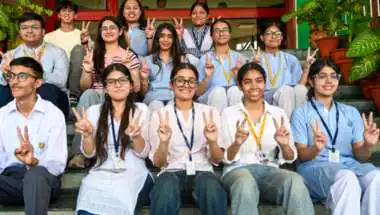
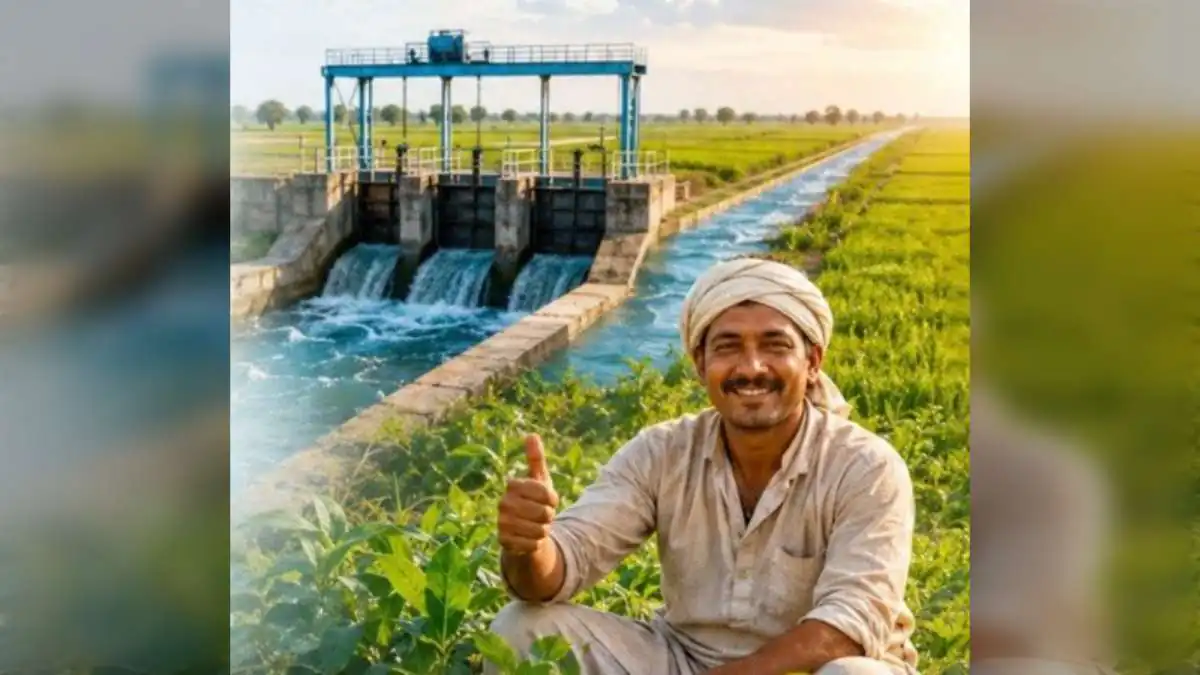
The Ministry has suggested that educational institutions organise tours for Higher Secondary and Senior Secondary students from nearby schools. The visits will span some of the most important components of JJM 2.0's operational architecture — Multi Village Schemes (MVS), Water Treatment Plants (WTPs), Intake Wells, and modern technologies such as Supervisory Control and Data Acquisition (SCADA) and Internet of Things (IoT) systems.
Students will also be taken to NABL-accredited Water Testing Laboratories — a rare direct exposure to the scientific machinery that ensures the water reaching households is safe.
For students, the exposure is significant. For most young learners, water security is either a policy headline or a household inconvenience. Standing inside a modern water treatment plant or a SCADA-monitored operations centre reframes it as an engineering, community and technology story combined.
How the Field Learnings Will Reach the World
The initiative's second — and perhaps more consequential — objective is dissemination. The Ministry aims to ensure that findings are shared through academic journals, institutional reports, newsletters, research papers, websites and other suitable platforms. That structured pipeline of academic-grade documentation is what allows a case study from one district to become a template for another.
This is exactly the kind of evidence-based knowledge-sharing India's development sector has often called for — moving beyond scheme brochures and press releases into peer-reviewed, publicly accessible research.
The Coordination Framework
To make it work at scale, the Ministry has asked institutions to coordinate with local academic institutions and schools, District Water and Sanitation Missions (DWSMs) and Gram Panchayats for planning the educational tours. That triangulation — academic institutions, district missions and village-level governance — is what will decide whether the initiative delivers meaningful research or ends up as tick-box tourism.
Why It Matters
India's rural drinking water story is, in many ways, one of the country's most under-covered infrastructure transformations. Millions of households have been connected to piped water for the first time under JJM. But documenting how it worked — through which combination of community participation, engineering choices, monitoring frameworks and governance models — is what will allow these gains to be sustained and replicated.
By involving educational institutions, the Ministry is doing something structurally clever. It is decentralising research capacity, distributing it across districts, and turning students into stakeholders of the scheme rather than just observers.
Educational and Governance Impact
For India's higher education institutions, the initiative opens up a rare pipeline of field-based research, publication opportunity and community engagement. For students, it becomes an opportunity to build tangible research portfolios anchored in real developmental work. And for the mission itself, it creates a self-reinforcing knowledge cycle — new learnings feeding back into policy design, technology adoption and community mobilisation.
The Bigger Picture
Through this initiative, JJM 2.0 seeks to deepen the culture of learning from the field, encourage innovation and make successful rural water supply practices more visible and accessible — thereby contributing to the sustained strengthening of rural water security. In effect, the Centre is doing something rare: acknowledging that scheme success cannot be measured in numbers alone, and that the story of how India's rural water systems now work deserves to be written down, published and studied.
If it delivers on its promise, this initiative could become a model for how large-scale public schemes engage with academia in India. Because sometimes, the best way to future-proof a national mission is to hand a portion of its documentation over to the next generation — and let them turn it into knowledge that outlasts any single government term.