























Assam Welcomes World’s First IVF Lakhimi Calf

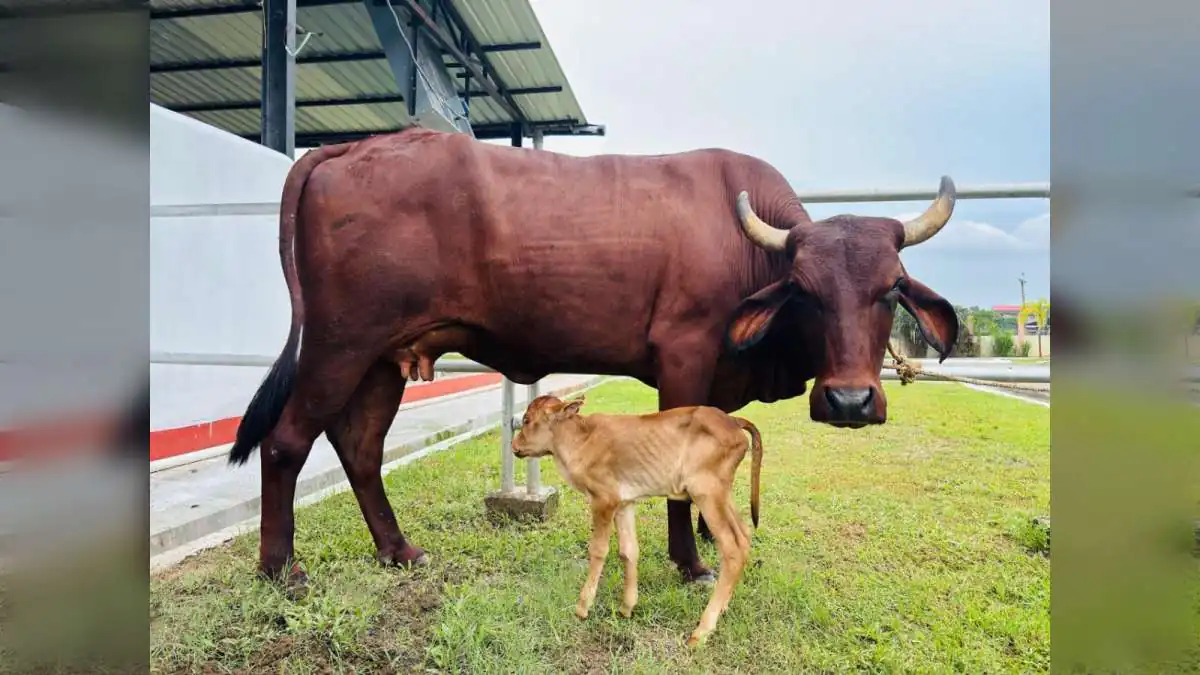
Assam veterinary scientists achieve a global first with the birth of an IVF-born indigenous Lakhimi calf in Khanapara.

Raaisha Upadhyay
Raaisha Upadhyay Verified Public Figure • 16 Mar, 2026 Editor
Aug 22, 2026 • 8:09 PM  1
N
National
NEWS CARD
Logo
Assam Welcomes World’s First IVF Lakhimi Calf
“Assam Welcomes World’s First IVF Lakhimi Calf”

Favicon
Read more on en.nav18.in/s/064a6e
22 Aug 2026
https://en.nav18.in/s/064a6e
Copied
Assam Welcomes World’s First IVF Lakhimi Calf

GUWAHATI — Veterinary scientists in Assam have achieved a major scientific milestone with the birth of the world's first female calf of the indigenous Lakhimi cattle breed produced via In-Vitro Fertilization (IVF). Announcing the breakthrough on Saturday, Chief Minister Himanta Biswa Sarma hailed the success as a transformative development for the state's agricultural biotechnology and livestock conservation efforts.

The successful delivery took place at the specialized IVF Laboratory located within the College of Veterinary Science at the Assam Agricultural and Veterinary University campus in Khanapara, Guwahati.
Genetic Preservation Meets Assisted Reproduction

The laboratory facility behind the breakthrough was established under the central government's Rashtriya Gokul Mission—a national initiative aimed at conserving, developing, and genetically upgrading indigenous bovine breeds.

Lakhimi cattle, native to the floodplains and hilly terrain of Assam, are prized for their hardiness, disease resistance, and adaptability to humid climatic conditions. However, traditional breeding constraints have historically limited rapid multiplication of high-yielding Lakhimi genetic stock.

By applying assisted reproductive technologies (ART) to native breeds, scientists can extract oocytes from genetically superior donor cows, fertilize them in a controlled laboratory setting, and transfer viable embryos into surrogate cows. This process significantly accelerates generation intervals and allows high-value indigenous genetic lines to expand rapidly across smallholder dairy communities.

"The world's first IVF female calf of the Lakhimi breed -- native to Assam -- has been born at the Assam Veterinary and Fishery University," Chief Minister Sarma posted on X (formerly Twitter). "This achievement represents a historic convergence of Assam's civilization, culture, and innovation."

Economic and Dairy Implications for Rural Assam

The successful application of embryo transfer technology to Lakhimi cattle is expected to address several structural challenges facing the region's dairy sector, including low per-animal milk yields and livestock disease vulnerability.

According to veterinary researchers involved in the project, scaling up IVF operations for indigenous cattle provides a dual benefit: preserving rare regional genetic diversity while systematically selecting for higher milk production and disease resistance over successive generations.

Sarma emphasized that while the newborn calf is small in physical size, its scientific significance carries massive long-term implications for the regional rural economy.

"My heartiest congratulations to all the veterinary scientists and professionals behind this historic achievement," Sarma added. "This work has the potential to usher in a new era for Assam's dairy sector, improving disease control, enhancing milk productivity, and boosting the livelihoods of our livestock farmers."

Building on Regional Biotechnology Milestones

Saturday's announcement builds on a series of recent reproductive technology successes achieved by the Khanapara research facility. Earlier this year, the university's veterinary team successfully delivered Assam's first field-level IVF-born female Gir calf in Sonapur, demonstrating the commercial and operational viability of embryo transfer techniques under real-world farming conditions.

With the successful birth of the Lakhimi calf, veterinary researchers are now preparing to expand embryo transfer protocols to progressive dairy clusters across rural districts in Assam.

By combining modern genetic selection tools with indigenous livestock conservation, the state aims to build a self-sustaining dairy framework that reduces reliance on inter-state milk imports while safeguarding native cattle heritage.

favorite Follow us for the latest updates:

Raaisha Upadhyay Verified Public Figure • 16 Mar, 2026 Editor

Digital Archives

home Home amp_stories Web Stories local_fire_department Trending play_circle Videos mark_email_unread Newsletter