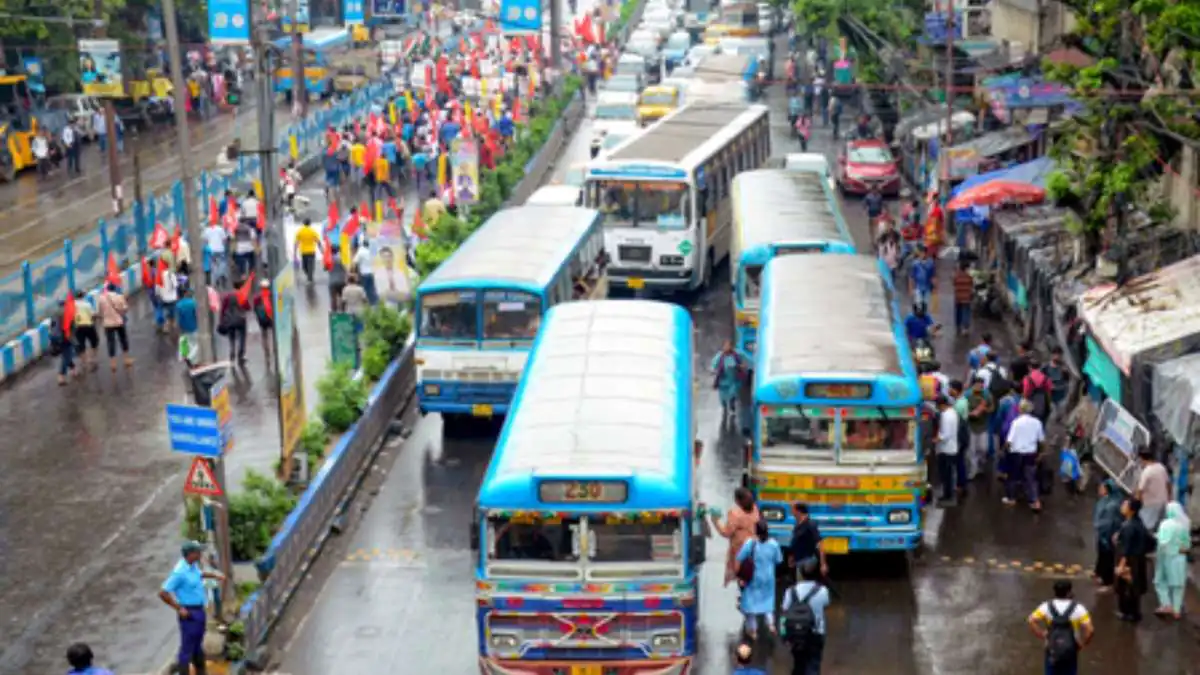





































For many Kolkata commuters, booking a bike or cab on an app takes a few taps, and few check what colour the number plate is. The West Bengal transport department now wants that to matter. It has launched a major crackdown on private four-wheelers and two-wheelers that are illegally working as app-based cabs without the required commercial registration and licences.
Aggregators told to self-police
Under a notification issued by the department, all app-cab aggregators must identify private vehicles registered on their platforms and remove them within the next seven days. From now on, only vehicles with valid commercial licences and yellow commercial number plates can run through these apps.
The notification also requires every aggregator to maintain a central office in West Bengal. This office will be the point of contact for the state transport department and traffic police, and will handle customer grievances.
"These new guidelines have already been sent to all the aggregator agencies. They have been directed to submit the complete address of their office in writing to the state transport department within seven days. The guidelines also make it clear that the agencies concerned are responsible for ensuring that their services comply with the Motor Vehicles Act and government regulations. Failure to follow the instructions could invite legal action," a senior transport department official said.
How the loophole worked
The department recently found that several vehicles without commercial licences and yellow plates, mostly two-wheelers, had enrolled with different aggregators and were accepting passenger bookings. According to the official, private vehicle owners could simply download an app, register their vehicle number and start getting rides, with no commercial permit needed.
"This is completely illegal. Only vehicles with valid commercial licences and yellow-coloured commercial number plates are eligible to be registered with app-cab aggregator agencies," the official said.
Why it matters for passengers
The official pointed to two main problems. The first is passenger protection. If something goes wrong during a ride in a vehicle that is not commercially registered, the aggregator may refuse to take responsibility, and the rider may have no clear way to seek help. The second is revenue. These vehicles skip commercial registration and regulatory requirements, which causes substantial losses to the state government.
The order also affects the many people who use their own bikes or cars to earn extra income through ride-hailing apps. Unless they convert to commercial registration, many of them could be off the platforms within a week. Commuters may notice fewer available rides, especially two-wheeler options, at least in the short term.
What comes next
The department says it will tighten monitoring of app-based transport services and hold aggregators accountable for compliance. Over the next seven days, the focus will be on how quickly the platforms remove non-compliant vehicles, whether they set up their Bengal offices on time, and whether drivers move to commercial registration or leave the apps.
With inputs from IANS