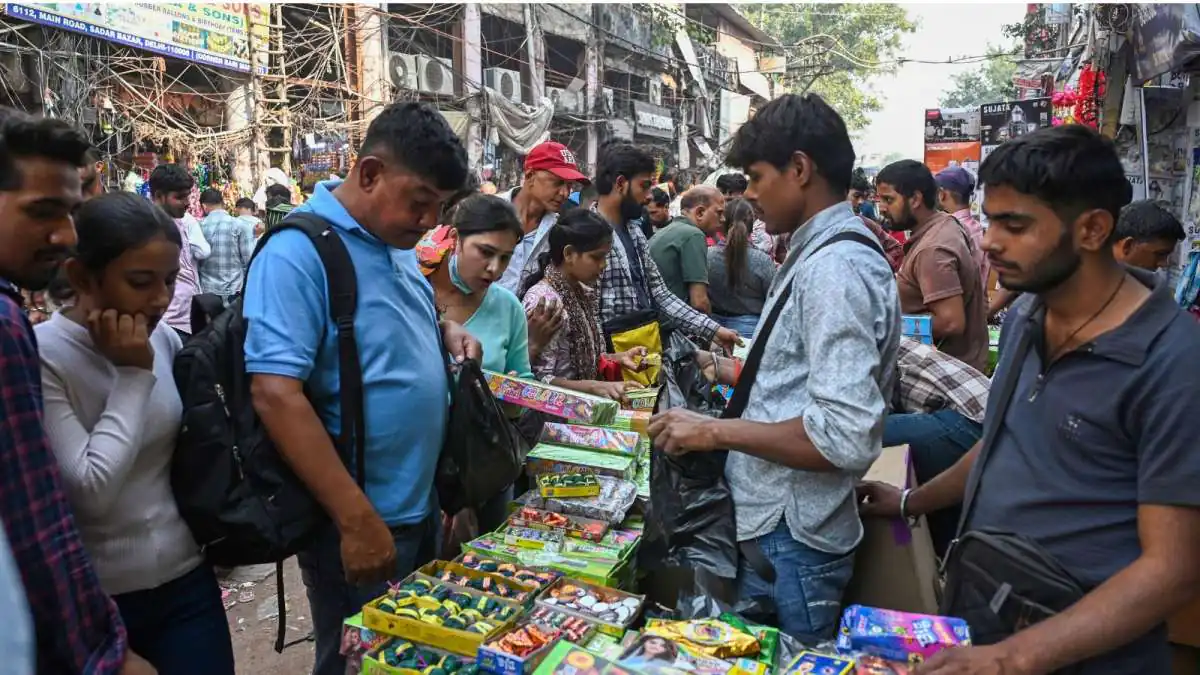





























Every winter, Delhi's pollution debate settles on a few familiar targets, and Diwali firecrackers are always among them. This year a Delhi trade body is pushing back with a direct challenge to the authorities: prove that a ban would actually clean the air.
"Stop the fashion of always making firecracker traders and Diwali firecrackers the villains for pollution," the CTI said. It called for coordinated action with the Central government and neighbouring states on stubble burning.
The Timeline Argument
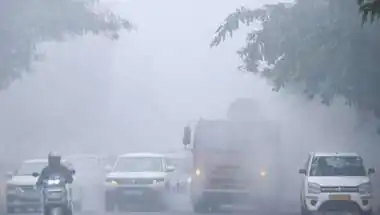
CTI's main argument is about timing. It says Delhi's AQI was already between 350 and 400 on November 5, 6 and 7, before firecrackers were burst on November 8. In its view, that shows crackers are not the root cause.
The body also pointed to the seasonal pattern. Air quality worsens between October and January and stays relatively better from March to September. CTI links this to stubble burning in neighbouring states, saying the air gets worse when crop-residue fires begin and improves when they stop.
Its challenge to policymakers is specific. If no credible organisation can guarantee that the AQI will stay below 300 between October and January under a complete ban, CTI asked, "then why should firecracker traders be punished?" It added that it could persuade its member traders in Delhi not to set up shops next year, but questioned whether that would bring cleaner winters.
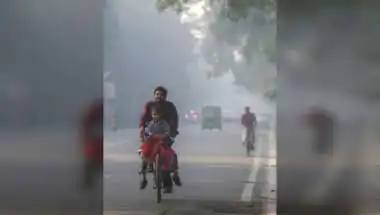
The point about pollution sources is broadly consistent with the wider debate. Delhi's winter smog is generally understood to come from several sources at once: vehicle emissions, road and construction dust, industrial activity and crop-residue fires, made worse by cold, still weather that traps pollutants close to the ground. Firecrackers are usually seen as one factor that adds to an already poor baseline, not the main driver. That is why experts often warn that any single-cause explanation, about crackers or about stubble, oversimplifies the problem.
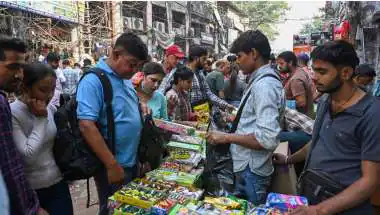
Beyond air quality, CTI's statement is mostly about money. The body says nearly 10 lakh people nationwide depend on the firecracker trade. Small traders invest capital all year and earn a large share of their annual income in the 15-20 days around Diwali. Restrictions announced at the last minute leave that stock stranded, CTI said. It also asked why traders are still targeted when manufacturers are producing green firecrackers in line with court directions.
The body also took the debate into culture and religion. Saying it respects all communities, CTI asked why the strictest environmental rules and legal petitions seem to centre on Hindu festivals. It listed curbs on crackers at Diwali, water use at Holi, the Yamuna during Chhath, DJs during Kanwar Yatra and idol immersion during Ganesh festivals. It also contrasted these with what it sees as weaker scrutiny of New Year's Eve fireworks and certain other religious practices. "We do not want to teach children that the meaning of festivals is only restrictions," it said.
CTI's own proposal is moderate: fewer crackers, designated bursting hours and wider use of green firecrackers instead of a blanket ban. Whether regulators engage with its AQI guarantee question may decide if next Diwali brings the usual last-minute restrictions or a more planned, year-round approach to Delhi's air.
With inputs from IANS