



























Ranchi AQI Hits 193 After Diwali, PM2.5 Stays Top Pollutant

Ranchi’s air worsened after Diwali, with Sector 2 touching AQI 193. See area-wise readings, why PM2.5 lingers at night and who should take extra care.

Raaisha Upadhyay
Raaisha Upadhyay Verified Public Figure • 16 Mar, 2026 Editor
Nov 9, 2026 • 1:02 PM  4
N
National
NEWS CARD
Logo
Ranchi AQI Hits 193 After Diwali, PM2.5 Stays Top Pollutant
“Ranchi AQI Hits 193 After Diwali, PM2.5 Stays Top Pollutant”

Favicon
Read more on en.nav18.in/s/32e8a7
9 Nov 2026
https://en.nav18.in/s/32e8a7
Copied
Ranchi AQI Hits 193 After Diwali, PM2.5 Stays Top Pollutant

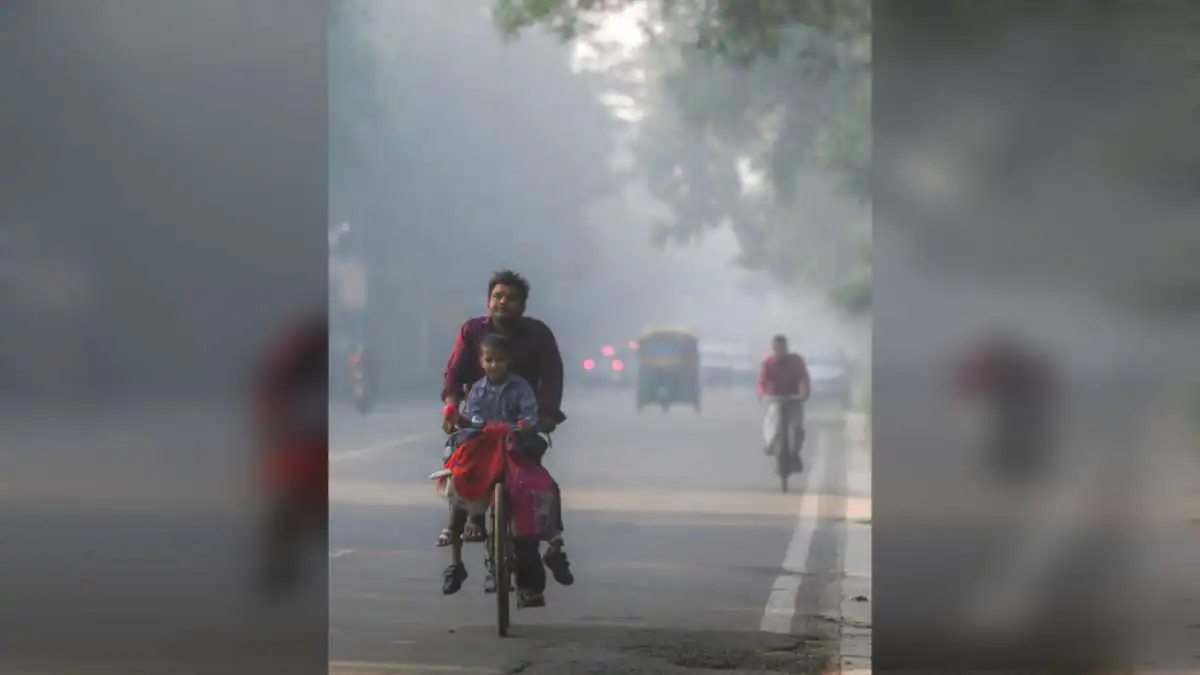
For anyone in Ranchi planning a dawn walk this week, the timing may matter more than the headline number. The city's air quality has worsened steadily over the past three days following Diwali celebrations and firecracker bursting, and the hours when many residents step out for exercise are also the ones when pollution is likely to be felt most.

The Air Quality Index (AQI) reached 193 in several localities on November 9, up from the 'Moderate' category recorded on November 7. Ranchi's daily average stood between 142 and 152 on November 7 and climbed to between 156 and 164 on November 8. Real-time readings taken at different times on November 9 fluctuated between 163 and 189, with some parts of the city going higher.


Locality AQI (November 9)
Sector 2 193
Deepatoli 191
Dhumsa Toli 189
Gandhi Nagar Colony 189
Koker Chowk 186

The available data describes some areas as recording unhealthy levels, while the figures do not specify which AQI scale was used. On India's national index, 101–200 falls in the 'Moderate' band and 'Poor' begins at 201, which would place Sector 2 just below that threshold. Either way, the direction of travel is clear, and it is the speed of the rise that residents will be watching.

Why the air gets worse after dark

PM2.5 continues to be the major pollutant over Ranchi, with smoke and fine particulate matter from firecrackers among the contributing factors. The weather is adding to the problem. Falling temperatures and reduced wind speeds in November may keep pollutants suspended in the atmosphere for longer.

At night and in the early morning, lower temperatures and limited atmospheric dispersion can cause fine particles to gather closer to the ground, which is where people breathe them. Sunshine and increased atmospheric movement during the day may bring some variation, which helps explain why readings across the city have been swinging within a single day.

PM2.5 particles are small enough to travel deep into the lungs when inhaled. Children, elderly people and those suffering from respiratory illnesses are especially vulnerable.

Senior physician Dr Jitendra Kumar of CCL Hospital in Gandhinagar, Ranchi, has advised vulnerable individuals to avoid spending extended periods outdoors during early morning and late evening hours. He has also recommended avoiding strenuous physical activities in open spaces during these periods.

A problem bigger than one festival

Firecrackers alone cannot be held responsible for the decline. Vehicle emissions, dust and prevailing weather conditions also feed into the city's pollution levels, which means the numbers may not simply reset once the festive smoke clears.

Ranchi's readings remain well short of the extremes often reported from northern Indian cities at this time of year, but that offers limited comfort to the people most at risk. With pollution levels still fluctuating across the capital and cooler, stiller weather setting in, the coming days will show whether this was a short post-Diwali spike or the start of a harder winter for the city's air.

With inputs from IANS

favorite Follow us for the latest updates:

Raaisha Upadhyay Verified Public Figure • 16 Mar, 2026 Editor

Digital Archives

home Home amp_stories Web Stories local_fire_department Trending play_circle Videos mark_email_unread Newsletter