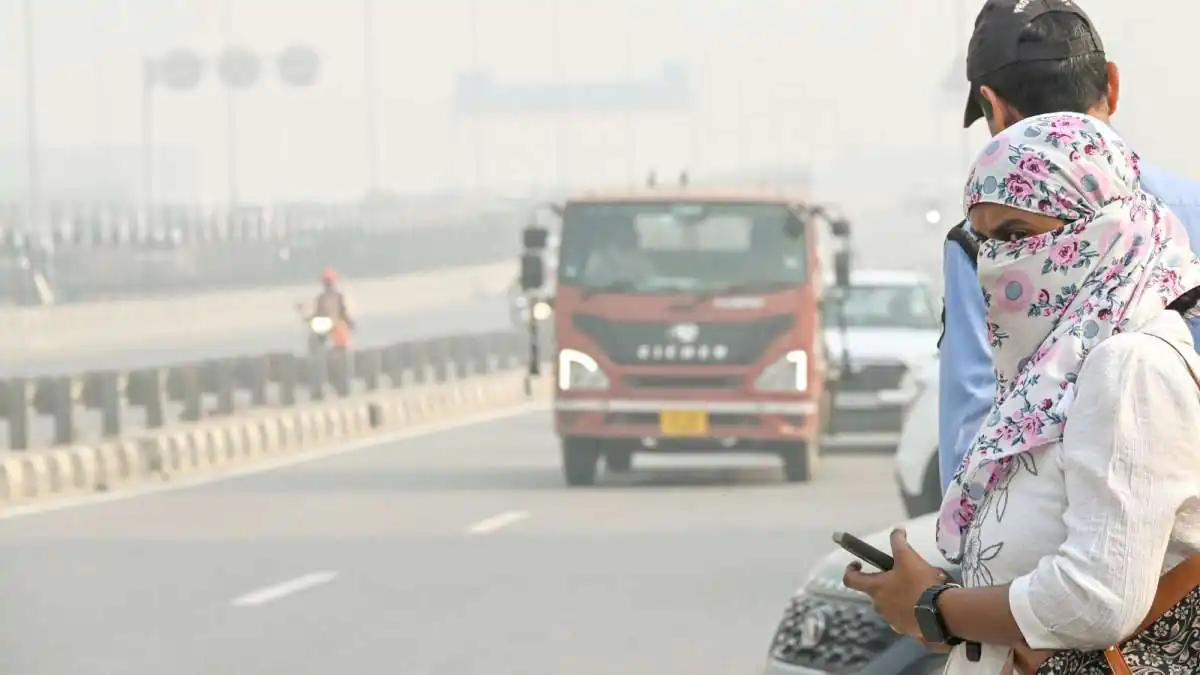



































For millions of people in Delhi-NCR, a western disturbance usually brings one hope: rain that might wash the smog out of the air. This time that hope looks unlikely. A fresh western disturbance has become active over northern India, according to the India Meteorological Department (IMD). However, most of its moisture is expected to fall on the mountains, while the plains stay dry and the air stays toxic.
A capital stuck above 400
The timing is bad. Air pollution remains a major concern across Delhi-NCR, with the Air Quality Index (AQI) at alarming levels in several cities. Delhi recorded an AQI of 463, Noida 456 and Greater Noida 426. Gurugram and other major NCR cities also stayed in severe territory, crossing the 400 mark.
Any reading above 400 falls in the 'severe' band of India's AQI scale. At that level, even healthy people can feel the effects, and those with heart or lung conditions face serious risk. Rain is one of the few natural ways to clear pollutants from the air quickly. Without it, residents can only hope the wind helps.
There is some hope there. The IMD expects Delhi-NCR's skies to stay largely clear over the coming days, with windy conditions. Stronger surface winds can help spread pollutants out. However, wind alone has rarely brought lasting relief once AQI levels reach the mid-400s.
The fog factor
Temperatures are expected to remain moderate for now. Delhi's maximum is likely to stay between 27 and 30 degrees Celsius and the minimum between 14 and 18 degrees Celsius. That will change soon. As temperatures fall further next week, the IMD expects colder conditions and possibly more fog in the morning hours.
For a city already struggling to breathe, this matters. Cooler, still mornings tend to keep pollutants trapped close to the ground. When fog mixes with that smoke, visibility can drop sharply. This affects morning commutes, flight schedules and outdoor activity, and it adds to the existing health concerns.
Meanwhile, southern India faces very different weather. Cyclone Murasu, which formed over the Bay of Bengal, has weakened after crossing the Andhra Pradesh coast. Even so, rain is expected to continue in parts of the south until November 8. A cyclonic system over Lakshadweep, coastal Karnataka and southern Tamil Nadu is driving that rain. Light to moderate rainfall is forecast across Tamil Nadu, Puducherry, Kerala, Mahe and Karaikal.
India's weather this week is split in two. The south gets wet days and the hills get fresh snow, while the northern plains get dry skies, worsening smog and the first signs of winter. Until the weather brings real rain to Delhi-NCR, residents may have to rely on masks, air purifiers and staying indoors.