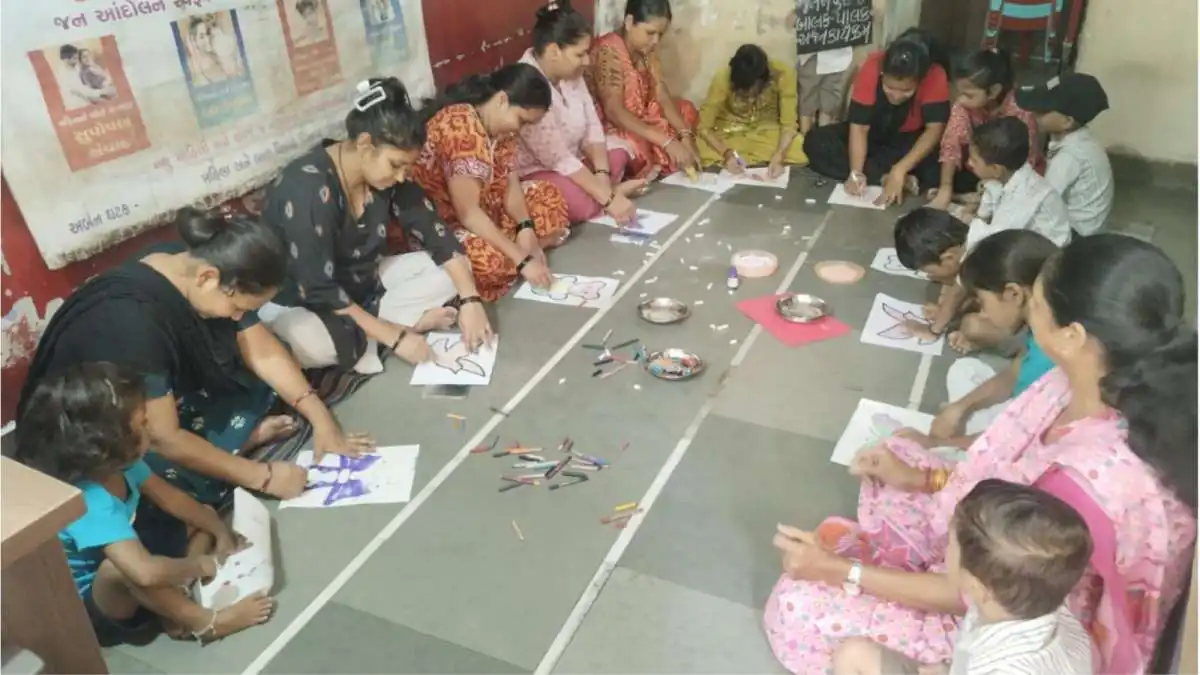
Gujarat will constitute women-led Anganwadi Management Committees (AMCs) at every Anganwadi Centre in the state to increase community participation in nutrition, healthcare and early childhood education, while improving monitoring of services for children and mothers.
Composition of the Committees
"Under the guidance of Women and Child Development Minister Manisha Vakil, each AMC will be constituted by the concerned Child Development Project Officer (CDPO). All seven members of the committee will be women, with the woman supervisor serving as Chairperson and the Anganwadi worker as Member-Secretary," officials said. The committee will also include an ASHA worker, two mothers of children aged 3 to 6 years enrolled at the Anganwadi, a woman member of a local Self-Help Group (SHG) or NGO/CSO, and a woman teacher from the nearest government primary school, drawing together a cross-section of local stakeholders with direct, everyday knowledge of the Anganwadi's functioning.
Why This Structure Matters
The arrangement is intended to improve coordination between Anganwadi, health, education and local self-government institutions, while giving the community a greater role in ensuring transparency and accountability in service delivery. By deliberately composing the committee entirely of women with direct ties to the Anganwadi's beneficiaries, staff and surrounding institutions, the structure appears designed to embed oversight within the very community the centre serves, rather than relying solely on top-down administrative monitoring.
Regular Review Meetings
AMCs will meet once every two months at the Anganwadi Centre to review its functioning and the quality and timely delivery of services. During these meetings, committees will examine facilities including the Anganwadi building, drinking water, toilets, kitchen, storage, furniture, equipment, Teaching Learning Material (TLM), food quality and hygiene, covering essentially every physical and operational aspect of the centre's day-to-day running.
Monitoring Nutrition Services
The committees will also monitor supplementary nutrition services, including Take Home Ration (THR) and Hot Cooked Meals (HCM), with specific attention to food quality, freshness, hygiene and nutritional standards, addressing a core function of the Anganwadi system that directly affects child health outcomes.
Tracking Child Development and Health
They will review the growth of children aged 0 to 6 years, developmental milestones of children aged 0 to 3 years, health check-ups, identification of malnourished children, and referrals and follow-up of referred cases, giving the committees a comprehensive mandate spanning both routine monitoring and intervention in more serious cases requiring medical attention.
A Focus on Early Education
Early Childhood Care and Education (ECCE) will form another key area of monitoring. The committees will review daily pre-primary activities under 'Aadharshila', curriculum-based activities and Children's Day theme-based activities, besides checking whether records relating to children's development and monthly activities are maintained properly, extending the committees' oversight beyond health and nutrition into the educational dimension of Anganwadi services as well.
Ensuring No Eligible Beneficiary Is Left Out
"The initiative will also help ensure that eligible beneficiaries are not left out of Anganwadi services. Through household surveys and community mapping, the committees will support identification of pregnant women, lactating mothers and children aged 0 to 6 years," officials asserted, highlighting a proactive outreach function alongside the committees' more routine monitoring responsibilities.
Inclusive Services and Digital Record-Keeping
They will monitor registration, attendance and inclusive services for children with special needs, besides ensuring that beneficiary information on the Poshan Tracker is updated, tying the committee's local, on-the-ground work directly into the broader digital tracking infrastructure that underpins India's national nutrition programme.
Encouraging Broader Community Contribution
AMCs will also encourage parents, volunteers, private organisations, corporate entities, NGOs, CSOs and other community groups to contribute time, skills and resources to Anganwadi Centres. Support in the form of toys, clothes, activity materials and educational resources will be encouraged, while Panchayati Raj Institutions and Urban Local Bodies will be involved in establishing and maintaining Poshan Vatika or Nutri-Gardens, extending the initiative's reach into broader community and local governance participation.
Rules Governing Meetings and Decisions
At least four of the seven members, including the Chairperson and Vice-Chairperson, will have to be present for a meeting to proceed. Decisions will be taken by consensus wherever possible, and by majority when required, ensuring a clear procedural framework for how the committees will function and reach conclusions on the issues they review.
Documentation and Reporting Requirements
Minutes, including attendance, discussions, decisions and follow-up status, will be recorded in the prescribed format and submitted to the concerned CDPO within seven days. The CDPO will review the functioning of each committee at least twice a year, while major issues that cannot be resolved locally will be referred to the Programme Officer and CDPO, establishing a clear escalation pathway for concerns beyond the committee's own capacity to address.
Bringing Multiple Stakeholders Into the Review Process
The state government said the mechanism would bring mothers, ASHA workers, teachers, SHG members and other community representatives into the regular review of nutrition, child growth, early education, hygiene, infrastructure, beneficiary coverage and grievance redressal at Anganwadi Centres, effectively institutionalising community-level accountability as a standard feature of the Anganwadi system going forward.
Part of a Broader National Push
The initiative comes as the Centre has also focused on strengthening ECCE and nutrition services, with approval given in July 2026 for upgrading two lakh Anganwadi Centres as Saksham Anganwadis, placing Gujarat's new committee structure within a wider national effort to modernise and strengthen the country's early childhood nutrition and education infrastructure.