The Backbone: Mera Yuva Bharat's Nationwide Reach
Organised by Mera Yuva Bharat (MY Bharat), the nationwide programme will bring together young Indians at two colleges in every district across all States and Union Territories. That kind of granular, ground-level reach is what makes the Khelo India Dialogue distinctive. It is not simply a top-down address; it is engineered to actively involve grassroots participation, ensuring that the conversation flows both ways — from Delhi's platforms to the country's smallest districts and back.
Sport Meets the 2036 Olympic Vision
The initiative comes at a moment when India's sporting ambitions are extending well beyond participation and medals. The country is actively preparing to bid for the 2036 Olympics, and the Khelo India Dialogue is being framed as one of the platforms through which young Indians can be brought into that longer-term national vision. In effect, the government is inviting youth to see themselves not just as future athletes or spectators, but as active co-authors of India's next great sporting chapter.
Beyond Sport: A Wider Nation-Building Frame
What makes the Khelo India Dialogue distinctive is its willingness to move beyond the boundaries of sport alone. It brings together sports, fitness, youth leadership, volunteering, civic responsibility and nation-building — all within a single unified framework. That integrated approach reflects a broader policy conviction that sport is not merely about physical excellence; it is a proven vehicle for discipline, teamwork, civic pride, mental resilience and community engagement.
Yuva Samvaad: The Five-Theme Blueprint
A central component of the programme will be Yuva Samvaad, a structured youth-facing dialogue built around five broad themes. Together, these themes function as a blueprint for how young India is being asked to engage with sport and nation-building simultaneously.
Theme 1: Strengthening India's Sports Ecosystem
The first theme will focus on strengthening India's sports ecosystem through better facilities, coaching, sports science and inclusive participation. This is arguably the foundational layer — without world-class training environments, modern sports science infrastructure and inclusive access, no long-term sporting ambition can be realistically pursued. This theme will invite youth to reflect on what needs to change on the ground for India to compete at global levels.
Theme 2: Nurturing 2036 Olympic Talent
The second theme will examine ways to nurture talent for the 2036 Olympics through scientific talent identification, transparent selection and long-term athlete development. India's 2036 Olympic aspirations are only credible if backed by a full-cycle talent pipeline — from scouting to grooming to professional-grade development. Placing this discussion in front of young Indians ensures that the conversation begins early, with the very generation that will actually shape that Olympic outcome.
Theme 3: Creating a New Generation of Youth Leaders
The third theme will focus on creating a new generation of youth leaders — through governance platforms, structured leadership pathways, and MY Bharat-led volunteering programmes. In a democracy of India's scale, youth leadership development is not a soft priority; it is a structural imperative. The Khelo India Dialogue is being positioned to feed directly into that leadership pipeline.
Theme 4: Youth Contribution to Viksit Bharat
The fourth theme will explore how young people can contribute to Viksit Bharat — through developing civic-mindedness, future-ready skills and a culture of structured volunteering. India's long-term development story cannot be delivered by governments alone. It requires a generation of young Indians who see civic contribution as intrinsic to their identity — not optional to it.
Theme 5: Nasha Mukt Yuva Movement
The fifth theme will focus on the Nasha Mukt Yuva movement, positioning sport and peer networks as powerful tools to combat substance abuse among the youth. This is a critical, if sometimes underemphasised, application of sport — as a preventive social intervention. The initiative will be reinforced through weekly Jan Bhagidari activities under the Prime Minister's 100-week nationwide campaign launched on August 2, ensuring sustained, structured community-level participation.
Local Interactions Round It Off
Beyond the national address and structured Yuva Samvaad, the programme also incorporates a strong local layer. It will be followed by local interactions involving young participants, MY Bharat volunteers, local sportspersons and public representatives. Youth with a deep interest in sport will also get the opportunity to interact directly with leading Indian athletes and medal winners — bringing role-model inspiration into a live, dialogue-driven setting.
Why It Matters: The Convergence of Sport and Civic Identity
The Khelo India Dialogue reflects a maturing approach to India's sports ecosystem — one that recognises that sporting excellence and civic strength are inextricably linked. A country that trains for the Olympics simultaneously trains itself in the values of discipline, meritocracy, teamwork, resilience, respect and long-term commitment. Those very values are essential for nation-building at scale.
Industry Impact: A Signal for Sports Investment and Employment
For India's growing sports and wellness sector — from sports infrastructure companies to sportstech platforms, from athlete management firms to sports nutrition brands — programmes like Khelo India Dialogue send an important signal. Government focus on long-term sporting excellence, backed by grassroots-level engagement, typically translates into stronger policy support, increased public investment, expanding private sector opportunities, and a widening base of sports-linked employment.
The 2036 Olympic Bid: A Multi-Dimensional Vision
India's push to host the 2036 Olympics is not merely about winning bidding rights. It is about mobilising a decade-long structural transformation across athlete development, infrastructure, governance, coaching, technology and sports culture. The Khelo India Dialogue is a critical piece of that mobilisation — because ultimately, the 2036 Olympics, if hosted, will be delivered not by policies but by people. And most of those people are today college students, school athletes and young volunteers.
Youth Leadership: The Real Underlying Story
Woven through the entire Khelo India Dialogue is a deeper conviction — that India's next chapter will be shaped by the quality of its youth leadership. The programme is deliberately structured to give young people not just a voice, but a platform. Their aspirations, ideas and feedback on how India's sporting ecosystem and youth programmes should evolve will feed directly into the design of future policies and initiatives.
The Nasha Mukt Yuva Angle: A Preventive Public Health Priority
The Nasha Mukt Yuva movement's inclusion within the Khelo India Dialogue is particularly important. Substance abuse among young people is a serious challenge across India, and sport has consistently proven to be one of the most effective preventive interventions. Structured peer networks, physical engagement and sporting identity all offer powerful protective factors against addiction. Linking the Nasha Mukt Yuva movement with the wider Khelo India platform sharpens its reach and social credibility.
Audience Sentiment: A Programme That Speaks the Youth Language
For India's youth, the framing of the Khelo India Dialogue is likely to resonate strongly. It does not talk down to them; it invites them in as stakeholders. It does not confine sport to elite competition; it treats it as a lifelong civic tool. It does not view youth engagement as a soft outreach exercise; it treats it as a strategic national asset. That framing is precisely what today's young Indians increasingly demand from their public institutions.
Why It Matters: Sport as Soft Power for Nation-Building
Historically, some of the strongest examples of sport-driven nation-building have come from countries that consciously used their sporting infrastructure to shape civic identity, discipline, national pride and community engagement. From post-war Germany's rebuilding through football to China's transformation into a sporting powerhouse, sport has repeatedly demonstrated its ability to align national ambition with mass participation. India appears to be moving decisively into that same conversation with programmes like the Khelo India Dialogue.
The Bigger Picture: Building a Fitter, More Engaged Generation
At its heart, the Khelo India Dialogue is about far more than the Olympic bid or medal counts. It is about shaping a generation that is fitter, more disciplined, more civically engaged, more nationally invested and more socially conscious. It is about ensuring that India's sporting momentum is not built on isolated talent breakthroughs but on a broad, deep, inclusive foundation of youth participation.
What to Watch: From Dialogue to Delivery
The real test of the Khelo India Dialogue will lie in the follow-through. National-level addresses generate initial energy, but sustained impact requires strong operational execution — active MY Bharat chapters, well-structured volunteering platforms, transparent youth leadership pathways, expanded talent identification networks, and continuously deepening links between sport, education and social development. The government's willingness to build and maintain those operational rhythms will determine how far this initiative genuinely goes.
The Bottom Line
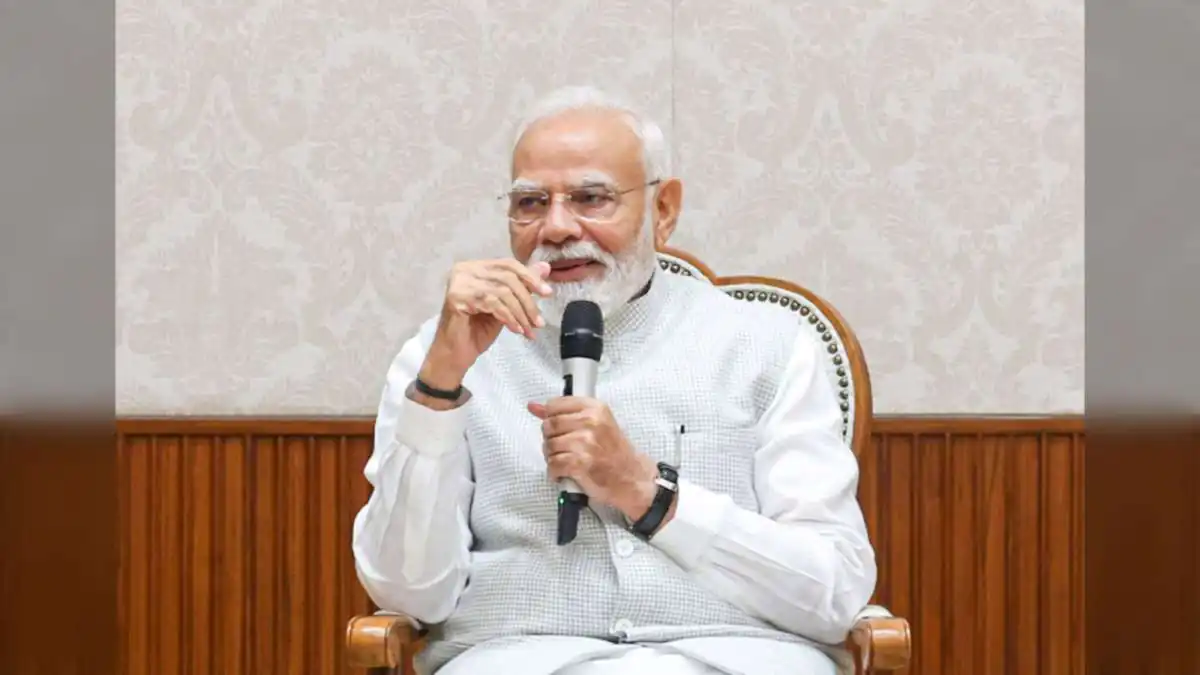
PM Modi's Khelo India Dialogue on Thursday is a landmark moment in India's evolving relationship with sport, youth engagement and nation-building. By linking the country's 2036 Olympic ambitions with a five-theme dialogue on ecosystem strengthening, talent development, youth leadership, Viksit Bharat contribution and the Nasha Mukt Yuva movement, the programme places young Indians at the very heart of the country's next great national mission. It reframes sport as a lifelong civic identity, not just an elite competitive pursuit. It positions youth not merely as future athletes or spectators, but as leaders, volunteers, changemakers and co-architects of India's long-term development. And in doing so, it lays down the foundation of a generation that will not only cheer for India on the global sporting stage — but will actively build the India that eventually stands on it. On National Sports Day 2026, the message from the Khelo India Dialogue will be clear: the game is bigger than the medals, the medals are bigger than the moments, and the moments are being built, right now, by a generation that is being asked to step forward — not later, but today.