





























The Scale of the Crisis
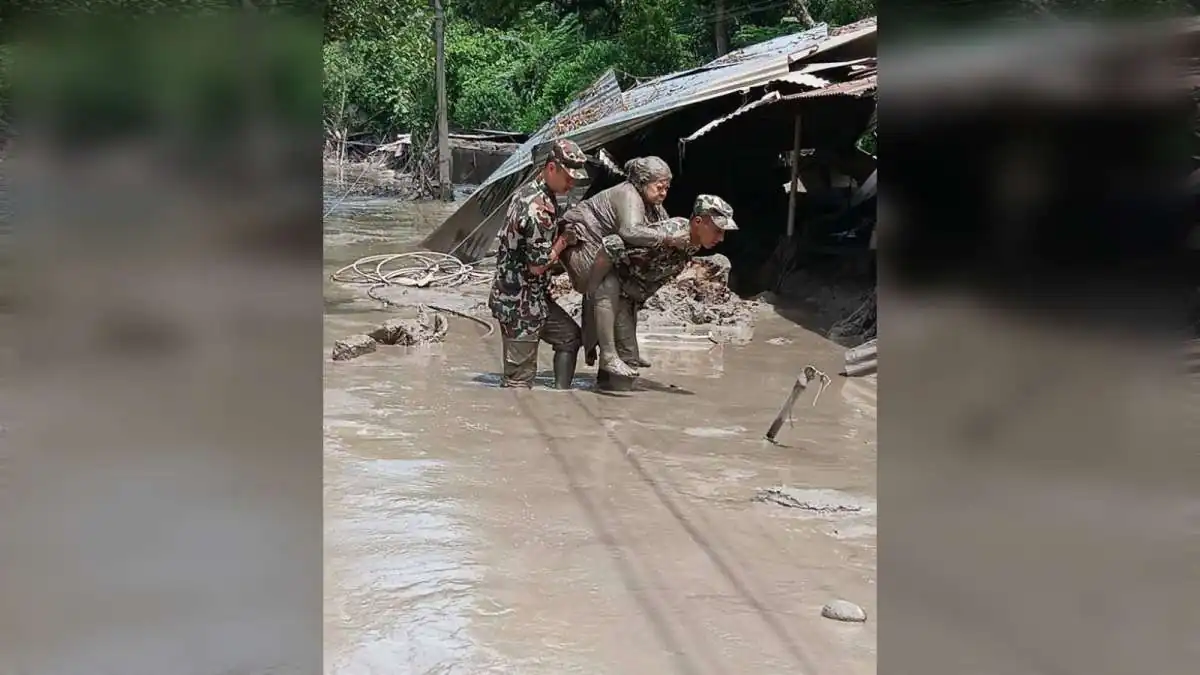
Preliminary reports from the disaster-hit region indicate that many of the missing Indians are Kailash Mansarovar pilgrims and tourists who were travelling through Rasuwa — a strategically significant border zone near Nepal-Tibet that serves as a major transit point for pilgrimage and Himalayan tourism. While the exact number of Rajasthan residents among the missing Indians has not yet been established, officials say the state cannot afford to wait for that clarity before mobilising.
The state's Disaster Management Department has already placed its full emergency machinery on alert to assist Rajasthan residents who may be stranded or missing. Severe damage to roads and infrastructure, coupled with disruptions to communication networks, has made it extremely difficult for families back home to establish contact with relatives in Nepal.
Command Centre in Jaipur, Coordination With Kathmandu
At the heart of the operation is the State Emergency Operation Centre (SEOC) in Jaipur, which is now functioning round the clock. It is coordinating in real time with the Indian Embassy in Kathmandu, the Ministry of External Affairs, and local authorities in Nepal to trace stranded residents and facilitate assistance and evacuation wherever possible.
The Helpline Grid: What Families Need to Know
The government has published a detailed set of contact points so that no family is left without an official channel. Toll-free numbers 1070 and 112 are the primary entry lines to the Rajasthan control room. In addition, families can call 0141-2851960, 0141-2385776 and 0141-2385777. Backup lines include 0141-2227296, 0141-2927392 and 0141-2227603. For internal government coordination, the emergency IP number is 28888. Written queries can be sent to relief-rj@nic.in.
Authorities have specifically requested callers to provide the traveller's full name, passport or identification details, last known location and any other available travel information. Doing so allows verification and cross-referencing to be done quickly — a critical factor when every hour counts.
Why It Matters
The Rajasthan response is significant because it treats the Nepal disaster as an active domestic emergency rather than an external situation. That distinction matters — it acknowledges that pilgrimage and Himalayan tourism from India often outpace formal registration systems, meaning a large number of citizens can be moving through a foreign border zone at any given time. The state's rapid activation of the SEOC and helpline grid is essentially a template for how sub-national governments in India can plug gaps in trans-border crisis response.
The Kailash Mansarovar Angle
The likely presence of Kailash Mansarovar pilgrims among the missing lends this disaster a particularly emotional weight. For thousands of Indian families each year, the pilgrimage represents both a spiritual milestone and a significant financial and physical undertaking. Rasuwa, sitting on the Nepal-Tibet frontier, is one of the key gateway zones for this journey — making it precisely the kind of area where a natural disaster can simultaneously hit a concentrated pool of Indian citizens.
A Warning Against Rumour and Panic
Along with the helpline rollout, the state government has issued a clear appeal: rely only on official channels for verified information, and avoid circulating unconfirmed reports on social media. In fast-moving disaster scenarios, misinformation can worsen family distress and complicate identification and rescue operations. Officials have urged families not to panic and to immediately report anyone believed to be missing or stranded — even if they are not certain.
The Bigger Picture
The Rasuwa flash floods are shaping up as one of the most complex trans-boundary disasters of the year, straddling geography, religion and diplomacy. For Rajasthan — a state whose citizens travel widely for religious and cultural journeys — the response is as much about civic assurance as it is about rescue coordination. As information trickles in from Nepal and Tibet, the state's message is clear: no missing citizen will be treated as just a number.
Also Read: Sadhguru's 80-Member Isha Group Missing in Nepal-Tibet Flood