In his welcome address, Dr. Suvendu Kumar Pratihari, Assistant Professor of Marketing & Entrepreneurship and Conference Chair, stressed the real-world value of grassroots and frugal approaches. He noted how these innovations often arise from necessity in resource-scarce settings, offering affordable answers with potential to scale beyond borders.
Prof. Kulbhushan Balooni, Vice-Chancellor of Birla Global University, reinforced the university's long-term vision. He pointed to India's deep history of grassroots ingenuity — from rural problem-solvers to everyday tinkerers — and how it continues to influence both local progress and broader global conversations on sustainable growth.
The event opened with Prof. Dhruba Kumar Gautam, Vice-Chancellor of Mid-West University, Nepal, as Chief Guest. Among the prominent voices were Prof. Anand Kumar Jaiswal from IIM Ahmedabad, Prof. S.P. Raj from Syracuse University, and Rajat Vardhan, founder and CEO of ScaNxt Scientific Technologies Pvt Ltd. Their sessions delved into frugal thinking and its role in emerging markets.
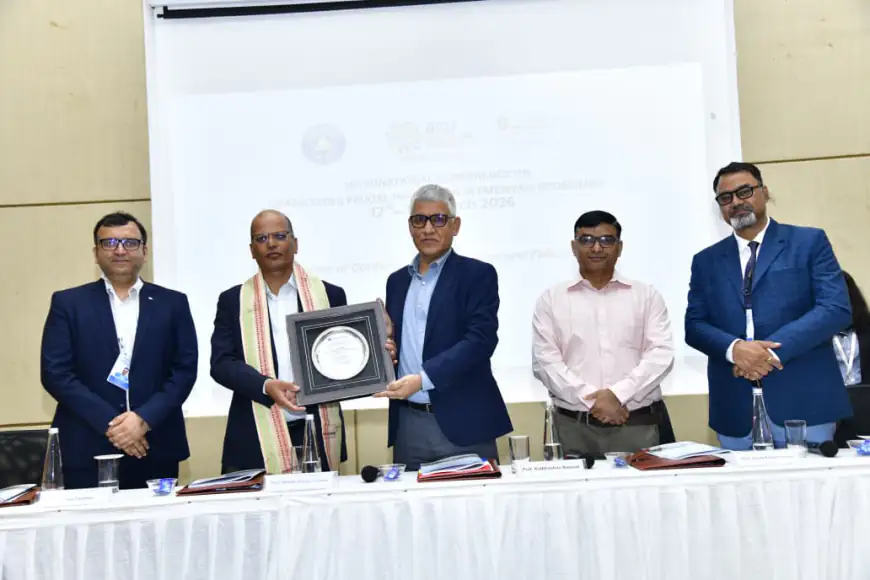
A key highlight came early when Birla Global University and Mid-West University signed a Memorandum of Understanding (MoU). The agreement aims to deepen ties through faculty and student exchanges, joint research projects, and collaborative efforts in entrepreneurship. Such partnerships are vital for cross-border knowledge sharing, especially in fields like innovation for inclusive development.
The conference featured focused technical discussions on building sustainable innovation systems, climate-resilient agriculture, and expanding grassroots ideas for wider economic inclusion. These sessions provided space for honest exchange on what works — and what doesn't — when turning local fixes into lasting impact.
Adding energy to the program was the Idea2Impact Bootcamp and Innovation Showcase, designed to spark student involvement in entrepreneurship. The bootcamp saw enthusiastic participation from 83 student ventures, who presented pitch decks and competed in challenges meant to sharpen real-world business skills.
The showcase itself featured 20 startups alongside two grassroots innovators, all displaying working prototypes. These ranged from cost-effective tools addressing daily problems in health, agriculture, and environment to clever hacks that deliver results without heavy investment. Participants demonstrated how necessity-driven creativity can produce solutions that are not only affordable but also adaptable to diverse contexts.
By hosting GFI 2026, Birla Global University has reinforced its role as a catalyst in Odisha's innovation journey. The event connected academic insight with on-the-ground action, while the new MoU with Mid-West University opens doors for ongoing cooperation. As emerging economies continue searching for equitable paths to progress, gatherings like this remind us that some of the most powerful answers often start small — in local communities with limited means but unlimited determination.
The conference closed on a note of optimism, with calls for continued support to such initiatives that bridge theory and practice, ultimately benefiting society at large.