CM Bhupendra Patel: 'Sacred Affection and Unbreakable Trust'
Chief Minister Bhupendra Patel, in a message posted on X, described Raksha Bandhan as a festival of the "sacred affection and unbreakable trust" between siblings. His framing carried both warmth and weight — positioning the festival not merely as a ritual, but as one of the most important symbols of family values, cultural traditions and respect for women's empowerment in Indian society.
"Heartiest greetings to everyone on the auspicious festival of Raksha Bandhan," CM Patel said, extending his wishes to citizens of the state and beyond. He expressed the hope that the festival would bring happiness, peace, prosperity and harmony to families — a wish that reflected both the personal and public significance the day holds for Indian households.
Deputy CM Sanghavi's Short but Poignant Note
Deputy Chief Minister Harsh Sanghavi kept his message deliberately brief, but its resonance was clear. "A promise that goes beyond words. Happy Rakshabandhan!" he posted on X — a single sentence that captured the emotional essence of the festival without needing embellishment. In a political landscape often filled with elaborate statements, Sanghavi's terse message stood out for its restraint.
Jagdish Vishwakarma: Placing Women's Empowerment at the Centre
State BJP president Jagdish Vishwakarma took the messaging a step further, using his festival greeting to underline the wider issue of women's dignity, safety and empowerment. In his message issued on the eve of the festival, he described Raksha Bandhan as a symbol of the love, affection and mutual trust shared by brothers and sisters.
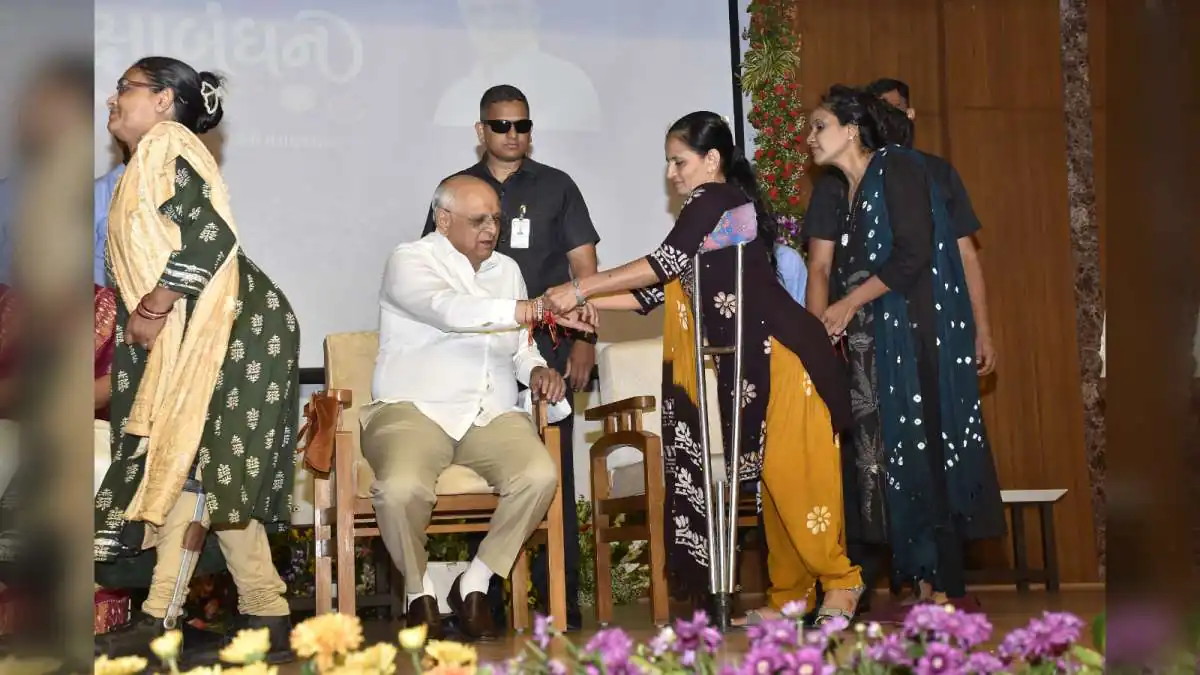
"Indians living across the world celebrate the festival with joy and enthusiasm. The tying of a rakhi by a sister on her brother's wrist represented her wishes for his happiness, health and safety, while the thread also symbolised the enduring affection and mutual responsibility between siblings," he emphasised.
'The Responsibility Is Mutual'
Vishwakarma was careful to frame the responsibility associated with Raksha Bandhan as flowing both ways. Brothers, he said, are expected to stand by their sisters and safeguard their dignity, security, happiness and self-respect at every stage of life. He described the festival as an occasion for siblings to reaffirm their commitment to supporting each other during difficult times and sharing in each other's happiness.
That reframing — from a ritual of protection given to a promise of mutual responsibility — is a small but significant shift. It recasts Raksha Bandhan in a language that resonates more strongly with contemporary conversations around gender, respect and shared care.
Linking the Festival to National Policy
Vishwakarma also tied the festival's spirit to a broader political and policy narrative. Indian culture, he said, has accorded women a position of honour and dignity — and that value now finds expression in modern governance.
"The BJP-led government under Prime Minister Narendra Modi had placed women's empowerment at the centre of the country's development through initiatives aimed at strengthening women's safety, dignity, economic self-reliance and participation in decision-making," he emphasised.
He added that Gujarat, under Chief Minister Bhupendra Patel's leadership, is continuing to move in the same direction — connecting festival messaging to real-world state policy on women's welfare, safety and empowerment.
Why It Matters
Political leaders across India routinely issue festival greetings, but the tone and framing can vary widely. What stands out about Gujarat's leadership messaging this Raksha Bandhan is the deliberate braiding of tradition and progress. The Chief Minister anchored the festival in family and cultural values. The Deputy Chief Minister captured its emotional core in a single line. And the state BJP chief connected the emotional ritual of tying a rakhi to the larger, ongoing project of women's empowerment.
Together, they've turned a one-day festival into a broader statement about how the state wants to be seen — as one that honours its cultural inheritance while continuing to strengthen the position of women in every sphere.
Cultural Impact
Raksha Bandhan has always carried more meaning than its surface ritual suggests. In an era where women's safety, agency and self-reliance are being debated more visibly than ever before in India, framing the festival as a mutual promise rather than a one-way protection gesture is a subtle but meaningful contribution to that conversation.
The Bigger Picture
For Gujarat, this year's Raksha Bandhan is arriving alongside the state's ongoing push toward inclusive, women-centred development. From the recent announcement of women-focused welfare schemes to the political leadership consistently placing women's empowerment at the centre of public messaging, the state is signalling clearly that its cultural celebrations and its policy priorities are meant to reinforce each other. As sisters across Gujarat tie rakhis on their brothers' wrists on Friday, the thread — that fragile, colourful strand — will carry both a family promise and a policy vision quietly stitched into it.