Rs 5,163 Crore to Over 1 Crore Beneficiaries
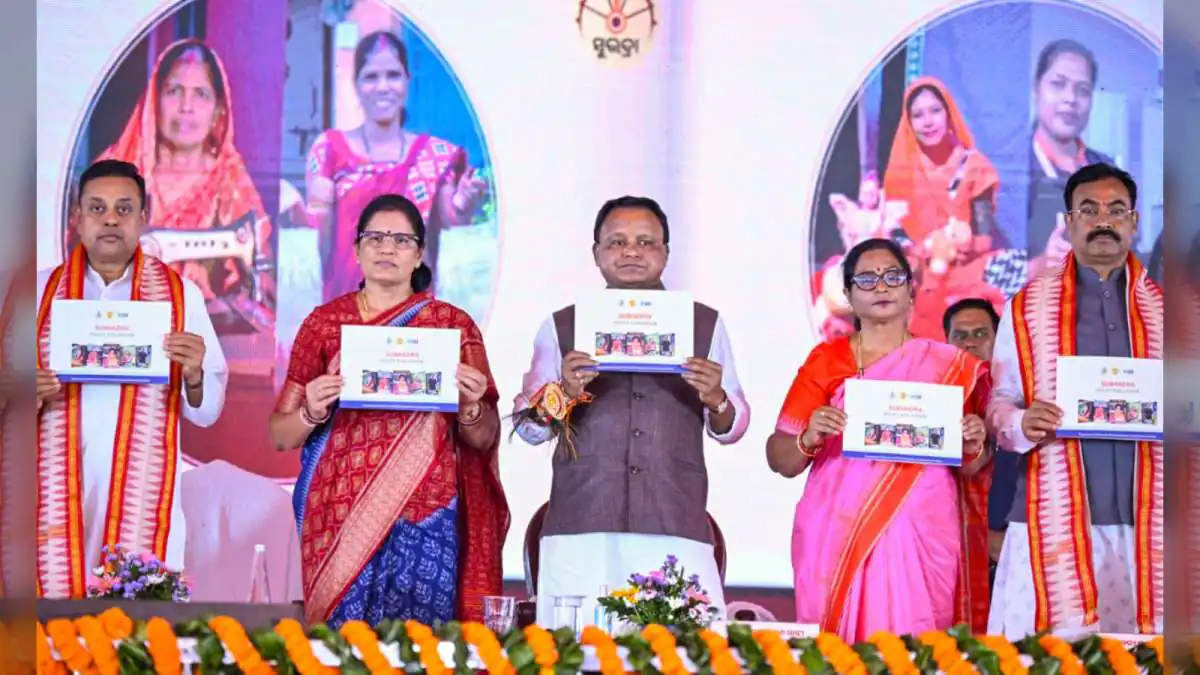
The scale of Subhadra Yojana's rollout is now impossible to ignore. On Friday, the fifth instalment of financial assistance under the scheme was distributed at a special event in Lathipada, Nayagada district. More than Rs 5,163 crore has been provided to 1,03,26,162 beneficiaries across the state, including 2,33,585 beneficiaries from Nayagada district alone.
That's not a symbolic scheme. That's a transfer architecture reaching one out of every few households in the state, moving money directly into women's accounts.
'Assistance Is Not Enough — Empowerment Is'
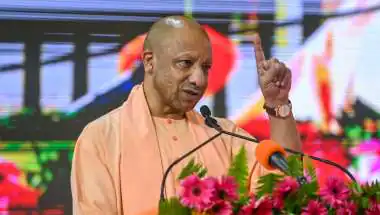
The CM's speech was notable for its philosophical framing. Majhi explained that merely assisting was not enough — women must be empowered to become socially, politically and economically self-reliant and make decisions independently. That distinction matters. In a policy landscape where welfare schemes are often measured only in disbursement numbers, positioning the outcome as decision-making agency represents a genuinely deeper vision.
Addressing the Subhadra mothers and sisters present at the event, Majhi said Subhadra Yojana was not merely an occasion for allocation of money — it was a symbol of women's empowerment and of the government's commitment towards half of the state's population.
What the IIM and SBI Surveys Reveal
To back up his framing, Majhi cited survey findings from IIM Sambalpur and the State Bank of India, both of which have studied the actual impact of Subhadra Yojana on beneficiaries' financial behaviour. The results are striking.
Around 80 per cent of women have not spent the Subhadra assistance only on their daily needs. Instead, they have used it for long-term financial security, business and developmental activities. That's a strong indicator that the scheme is not being consumed away — it's being converted into savings, capital and productive investment.
Even more telling — 87.19 per cent of beneficiaries said the Subhadra Yojana was extremely useful. The CM added that women beneficiaries' account balances and monthly expenditure have increased, suggesting that the scheme is contributing not just to spending capacity but to household financial stability.
The Women Entrepreneurship Platform
Complementing the cash transfer architecture, the government has set up a Women Entrepreneurship Platform designed to make women more self-reliant. Through this platform, women receive guidance on starting businesses, access to skill training, market linkages and financial support.
That combination — direct assistance plus structural entrepreneurship support — reflects a maturing understanding of what it takes to move a household from welfare to economic mobility. Cash alone builds resilience. Capacity plus cash builds enterprise.
Odisha's Lakhpati Didi Lead
The CM highlighted another milestone that many outside the state may have missed. Odisha has secured the first position in the country by creating 27 lakh Lakhpati Didis — the national programme aimed at supporting women's economic self-reliance — well ahead of the stipulated target. That is a formidable statistic. For a state that has often been described in developmental terms as "catching up," Odisha is instead leading the country on one of India's most important gender-forward economic indicators.
Local Development Commitments
The event also brought forward important local commitments for Nayagada district. The CM assured attendees that, with the cooperation of the Central Government, the Nayagada sugar mill would be established soon. He also confirmed that work on the Brutanga irrigation project would commence — two announcements that carry major implications for agriculture, employment and water security in the region.
The Political Presence at the Event
The programme drew a strong political presence, indicating the strategic importance the government attaches to Subhadra Yojana. Speaker Surama Padhy, Deputy Chief Minister Pravati Parida, Puri MP Sambit Patra and Kandhamal MP Sukanta Panigrahi were among the leaders in attendance.
Why It Matters
Subhadra Yojana has emerged as one of the most closely watched women-focused welfare schemes in India. Unlike many similar programmes across states, it has already crossed the one-crore beneficiary mark and is now backed by academic and financial-sector research validating its real-world impact. When 80% of assistance is going into long-term security and business use rather than daily consumption, the scheme starts to look less like welfare and more like a financial empowerment platform.
For CM Majhi, the political message is clear — the government is not just delivering money, it is delivering agency. And that framing is likely to shape how Odisha positions itself on women-centred governance in the coming years.
Industry and Economic Impact
The economic implications are significant. Rs 5,163 crore flowing into women-held bank accounts across Odisha translates into meaningful savings behaviour, small-business capital formation and consumption patterns that support local rural economies. Combined with the 27 lakh Lakhpati Didi milestone, the state is quietly building a broad-based women's economic ecosystem — one that could shape rural entrepreneurship trends far beyond Odisha's borders.
The Bigger Picture
Subhadra Yojana is no longer just a welfare scheme. It has become a policy statement about what women-first governance can look like in India — one that combines direct financial transfer, entrepreneurship enablement, banking-sector participation and independent academic evaluation. On a Friday in Lathipada, as the fifth instalment reached lakhs of women, Odisha CM Mohan Charan Majhi essentially staked out a clear governance philosophy: real empowerment isn't measured by the money a woman receives, but by the decisions she can now make with it. And by that measure, Subhadra Yojana appears to be quietly reshaping the state, one bank transfer at a time.