'Those Who Play Will Blossom'
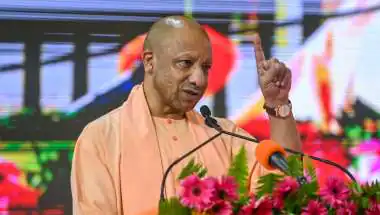
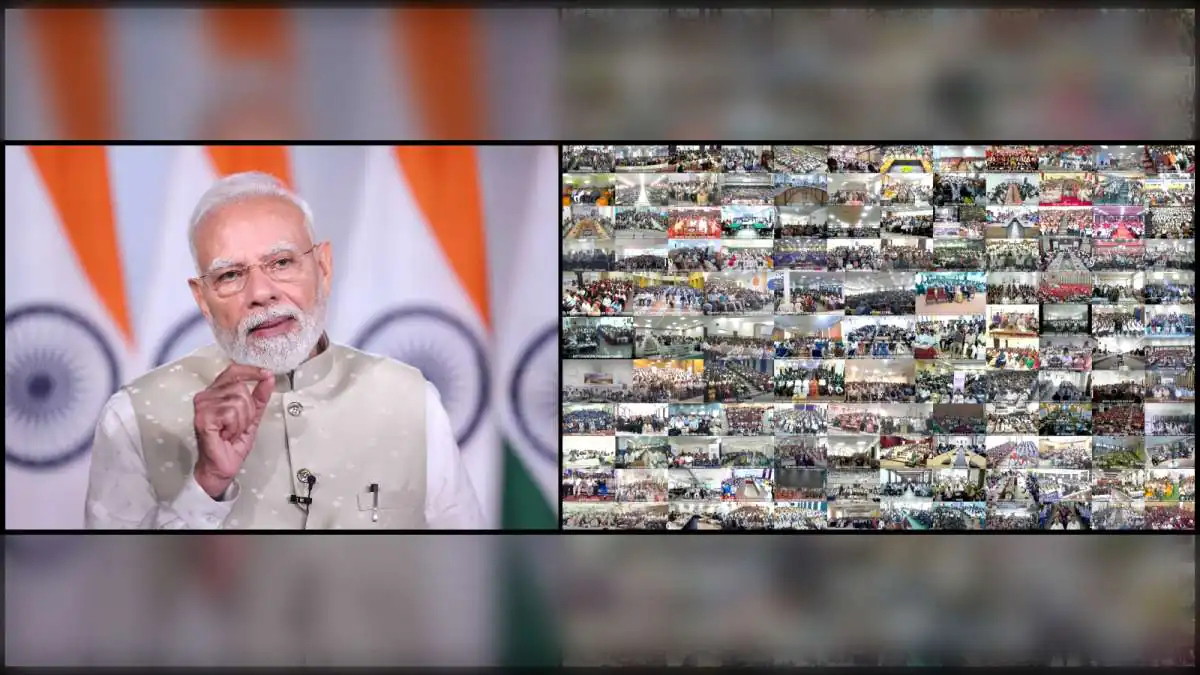
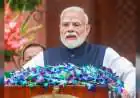
Speaking to the youth of the country, Prime Minister Modi framed sports not as a peripheral cultural activity but as a nation-building force. "When I talk about sports, it isn't just about winning medals; it is a campaign to integrate India's sports power and youth energy to build a Viksit Bharat. I have always said, 'Those who play will blossom,'" he said.
That framing — sports as a national capability, not just a competition — set the tone for everything that followed.
'We Must Master the Sports We Don't Even Play'
The Prime Minister then made a striking observation that reset the conversation about India's medal ambitions. "Other countries are winning medals in sports where India does not even participate; we must master these sports as well," he said. He added, "To increase our medal tally, we will absolutely have to achieve mastery in these sports."
It's a candid acknowledgement that India's Olympic performance has historically been concentrated in a narrow band of disciplines. Expanding that footprint isn't just a matter of pride — it's a mathematical necessity if the country wants to fundamentally increase its medal count on the world stage.
The 2036 Olympics Vision
Modi outlined India's long-term sporting strategy centred squarely on the 2036 Olympics. His stated goal: to build a talent base wide and deep enough that Indian athletes not only qualify across a broad range of disciplines but also excel in them. It's a long horizon — but that's precisely the point. Sporting excellence is a generational project, and 2036 gives the country a decade-plus to build a competitive pipeline from scratch.
A Nationwide Talent Hunt for Ages 5–15
At the heart of that strategy sits a bold new initiative — a massive national Talent Hunt targeting children aged 5 to 15. This is the age band where sporting foundations are laid, where identification of natural ability translates into structured training pathways, and where India has historically underinvested at scale.
"Whatever support is needed from the government for this, the government will walk shoulder-to-shoulder with you in it," the Prime Minister assured, signalling that the initiative would come with backing rather than just branding.
Sports as a National Priority: Mandaviya's Framing
Union Minister of Youth Affairs and Sports, Dr. Mansukh Mandaviya, welcomed the Prime Minister virtually from the Indian Institute of Technology (IIT) Gandhinagar, and put the shift in unambiguous terms. "The country has, for the first time, seen sports not merely as an activity but as a national priority," he said.
He also acknowledged the Prime Minister's personal relationship with the country's athletes — a factor often credited for reshaping how India's sporting fraternity feels about state support. "Your personal connect with athletes is the biggest strength of your sports vision. You have celebrated champions' victories; you have always given them praise and encouragement. But when any athlete faced defeat, you never left their side. This is the reason why India's athletes consider you their own," Mandaviya said.
MyBharat and the Youth Movement
Dr. Mandaviya highlighted the growing footprint of the MyBharat platform. "More than 2.4 crore youth across the country have already joined it, and are contributing to nation-building alongside their careers," he said.
On the broader policy front, he pointed out that the youth-centric spirit had shaped the country's fiscal priorities. "Based on the ideas of the youth, this year's budget was called the Youth-Centric Budget. Today the youth of the country feel that their ideas are no longer ignored, but implemented."
Governance, Transparency, Fair Opportunity
An equally significant part of Mandaviya's address focused on institutional reform. "Through the National Sports Governance Act, the effort to strengthen transparency, accountability and fair opportunity ensures that talent gets its due," he said. For decades, sports federation politics in India have been criticised for opacity and favouritism — turning transparency into a formal legislative priority is a structural shift, not just a slogan.
Voices From the Podium
After the Prime Minister's address, Olympic medallist Gagan Narang shared his journey with the youth at IIT Gandhinagar. "Thanks to the administrative changes in sports nowadays, the athletes get the best equipment to compete at the international level. It is because of such changes that we have come here," he said — a very grounded reminder that infrastructure and administrative reform translate directly into medals.
He was joined by 2024 Paralympic bronze medallist Sheetal Devi, who spoke about the shift in public mindset around para-sports. "Mindsets have changed today. Those who used to question, 'what can they (para-athletes) achieve,' today say, 'yes, they will achieve; they are the ones who will bring home the medals'," she said. It was a powerful summary of how India's perception of ability, disability and excellence has evolved in just a few short years.
The Five Themes for a Sporting India
The students of IIT Gandhinagar rounded out the event with a presentation built around five key themes outlined by the Prime Minister — Sports, Olympic Aspirations, Youth Leadership, Viksit Bharat, and Nasha Mukt Yuva. Together, they mapped India's journey towards sporting excellence with a clear focus on grassroots inclusion, elite ambition and drug-free youth culture.
Why It Matters
National Sports Day is celebrated on August 29 every year as the birth anniversary of hockey magician Major Dhyan Chand — a date that has traditionally been reserved for tribute and reflection. What the Khelo India Samvaad has done this year is convert that ceremonial moment into a national strategy briefing. By tying sports directly to the Viksit Bharat framework, PM Modi has effectively elevated athletic performance from a cultural aspiration into a measurable national goal.
The Bigger Picture
Between a nationwide Talent Hunt for kids aged 5 to 15, the ambitious 2036 Olympics roadmap, the National Sports Governance Act, expanding participation across new disciplines, and the youth-driven MyBharat movement, India is quietly building the scaffolding of what could become one of the most consequential sporting reinventions of any large nation this decade. If the vision holds and the delivery keeps pace, the story that begins on August 29, 2026 could well end with a very different India walking onto the Olympic podium in 2036.
Also Read: PM Modi's Khelo India Dialogue to Link 2036 Olympic Bid With Youth Leadership