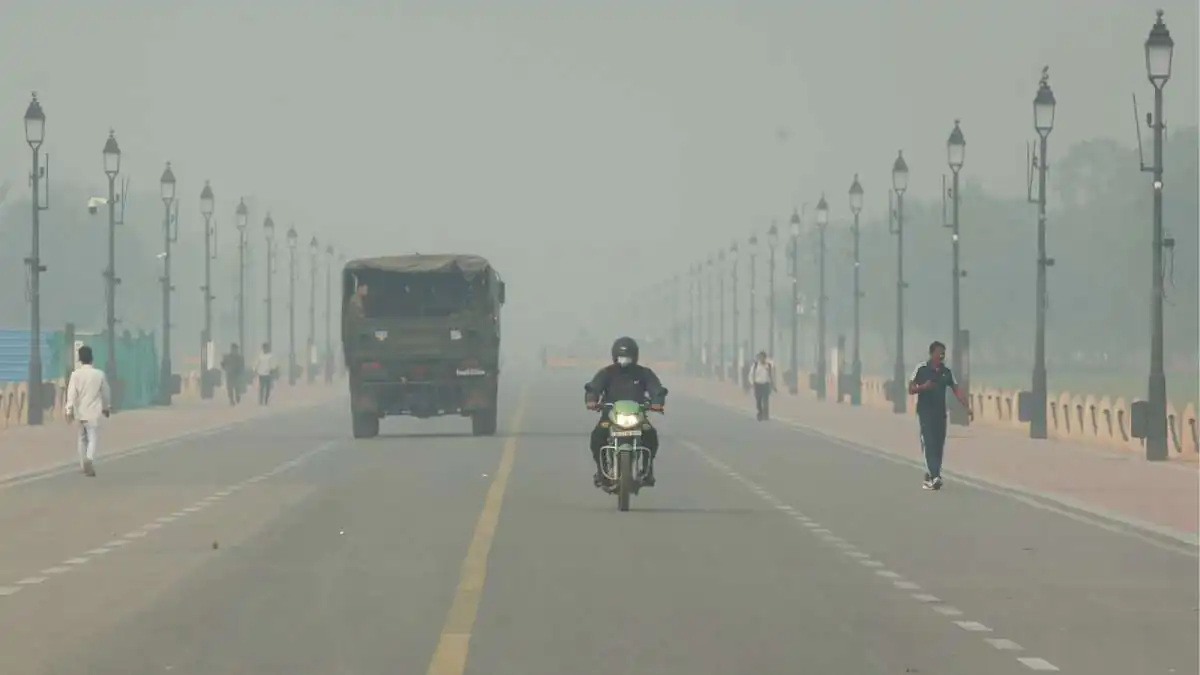






























For one day, Delhi breathed slightly easier. On November 10, the city's AQI dipped to 299, just inside the 'poor' band and its only reading below 300 in recent days. That relief has ended. On Thursday, the overall AQI climbed to 319, pushing the capital back into the 'very poor' category.
Where the Air Is Worst
Pollution was not spread evenly. The highest readings came from a group of stations across west, south-west and central Delhi. Pusa and NSIT Dwarka both recorded 388, close to the 'severe' threshold of 401. Chandni Chowk followed at 387, JNU at 380, Punjabi Bagh at 373 and Chhawla at 369. Aya Nagar and CRRI Mathura Road stood at 366 each, and Talkatora Garden at 365.
Other areas were also in the 'very poor' range. Jahangirpuri recorded 342, Wazirpur 336, Ghummanhera 334, Tikri Kalan 322, Anand Vihar 319, Ashok Vihar 317, and Burari and Bawana 316 each. Only a few stations, including Nangloi (297), Sonia Vihar (298), Maidan Garhi (290), Karala (258) and Ghoga (232), stayed in the 'poor' band.
Across the NCR, Gurugram recorded 300, Noida 284, Ghaziabad 280 and Faridabad 270. The pollution is clearly affecting the wider region, not just a few city neighbourhoods.
Why Relief Looks Unlikely
Weather usually decides how long a pollution spell lasts, and the outlook is not encouraging. The India Meteorological Department (IMD) had predicted no rainfall in Delhi between November 10 and 15. Maximum temperatures are expected to stay between 27 and 30 degrees Celsius and minimums between 14 and 17 degrees until November 15. A Western Disturbance may approach, but temperatures are not expected to change much.
Stable, dry conditions with no rain to wash pollutants out of the air usually let them build up close to the ground. In practice, residents should not expect a meaningful improvement before the weekend.
A Season That Started Badly
This year's crisis began early. The Centre for Science and Environment (CSE) found that average PM2.5 concentration in the week before Diwali was 236 micrograms per cubic metre, the highest for that period in three years. That was 97% higher than the 120 micrograms recorded in 2025 and 32% above the 179 micrograms seen in 2024.
Those numbers matter because the city entered the festive period already heavily polluted, leaving almost no margin when emissions rose around Diwali. Under the CPCB's AQI categories, 'very poor' air can cause respiratory illness with prolonged exposure. Children, older people and those with heart or lung conditions face the greatest risk.
With dry weather forecast until at least November 15, Delhi's air quality in the coming days will depend on how far local emissions can be brought down.
With inputs from IANS